About The Joy of Life
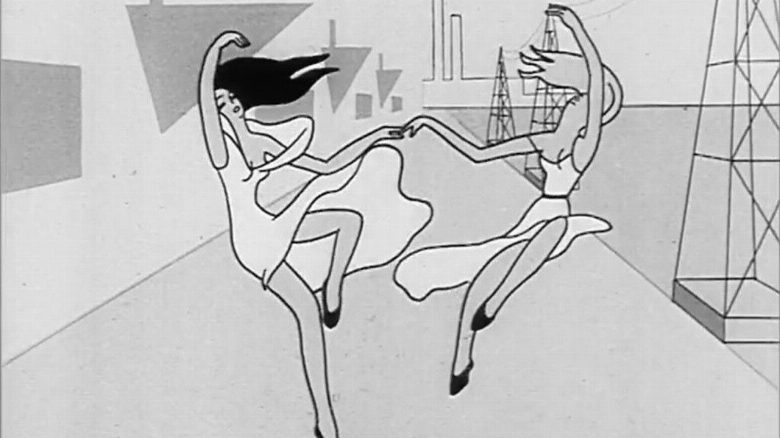
A blond and a raven-haired beauty move with verve and style through a changing landscape. The fabric of their dresses flows and floats, adding to their allure. One loses a shoe. A young man picks it up and pursues them on his bicycle.
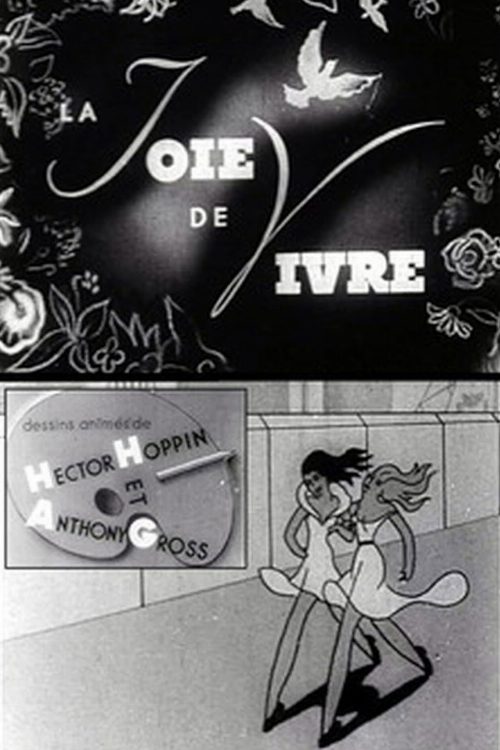
Stepping into the surrealist landscape of The Joy of Life, a 1934 French animation, feels like discovering a forgotten dream captured on celluloid. While modern audiences raised on the polished digital aesthetic of global studios might initially find the hand-drawn movements quaint, this short film represents a pivotal moment in the evolution of cinematic fantasy. Hector Hoppin crafts an experience that prioritizes rhythm and visual fluidity over traditional narrative constraints. The central premise revolves around two women whose distinct appearances create a striking visual contrast, navigating an environment that shifts and morphs with a dreamlike logic. When a small mishap involving a lost shoe triggers a chase sequence, the film transforms into a playful exploration of movement, where a bicycle serves as the bridge between reality and the whimsical world the director has built.
For viewers who admire the roots of experimental animation, this piece serves as a fascinating precursor to the abstract storytelling often celebrated in contemporary arthouse cinema. It captures a specific era of European artistic expression where the boundaries of physical reality were frequently challenged by creators seeking to push the medium beyond simple mimicry of life. The way the fabric of the characters clothing appears to live and breathe independently of their bodies is a testament to the technical ingenuity of the period. This film is not merely a historical artifact; it is a masterclass in visual storytelling for anyone interested in the intersection of art and early animation. Its charm lies in its brevity and its refusal to be tethered to conventional plot structures, making it an ideal watch for those who appreciate cinema as a sensory experience rather than just a vehicle for dialogue.
The Joy of Life stands out because it treats the screen as a canvas for motion rather than a stage for drama. In an age where Indian regional industries like the Telugu or Tamil film circuits are constantly redefining the limits of visual spectacle through massive budgets and high-end computer graphics, revisiting a minimalist 1934 classic provides a refreshing perspective on the power of simplicity. Hoppin demonstrates that a compelling premise does not require grand exposition, only a keen sense of timing and a willingness to embrace the impossible. It is a lighthearted, visually rhythmic piece that invites the audience to stop searching for deep philosophical weight and instead enjoy the seamless dance between the characters and their ever-changing, vibrant surroundings.