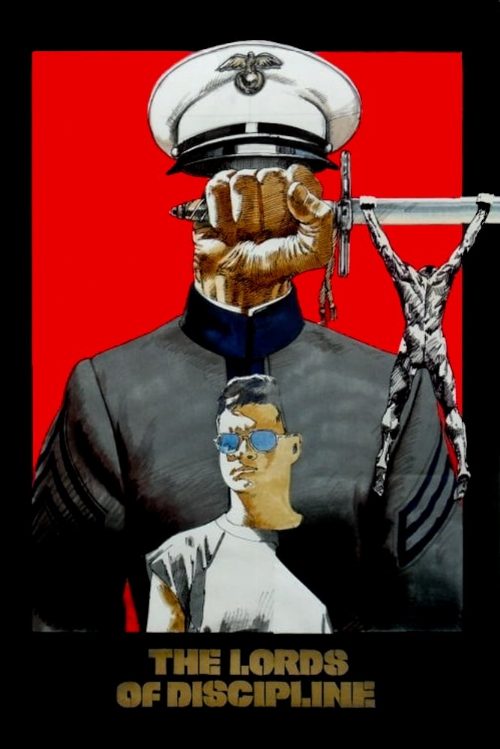
The Lords of Discipline(1983)
About The Lords of Discipline
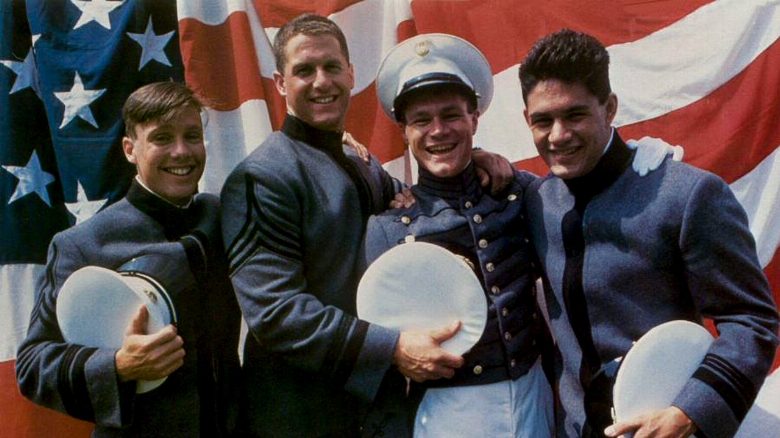
Will arrives for his last year at Military Academy, in the Deep South USA, in the 1960's. A black student, Pearce, has been accepted, for the first time and Will is asked to keep an eye out for the inevitable racism. The racists come in the form of The Ten, a secret group of the elite students. They want Pearce to leave on his own free will, but are prepared to torture him to make it 'his free will'. Will is forced to help Pearce and he is prepared to risk his own career to do so.
Set against the backdrop of a rigid 1960s Southern military academy, The Lords of Discipline explores the toxic intersection of institutional tradition and human cruelty. The narrative centers on a senior cadet tasked with protecting the institution's first Black student from an insidious underground brotherhood known as The Ten. While modern audiences might find parallels in the intense brotherhood dynamics seen in contemporary Indian campus dramas or political thrillers that examine systemic corruption, this film remains a stark study of the psychological toll of conformity. It moves beyond a simple story of racial integration, instead functioning as a chilling examination of how elite groups weaponize honor to enforce exclusion.
The film is particularly notable for its atmospheric tension and its commitment to portraying a culture where silence is often mandated by those in power. For viewers who appreciate the high-stakes narrative style of Indian cinema, especially the intense power struggles found in Malayalam or Hindi political thrillers, the film offers a similar sense of impending dread. The tension between the protagonist, played by David Keith, and the shadowy cabal effectively mirrors the common cinematic trope of an individual standing against a monolithic, corrupt organization. The visual language of the academy, with its stark uniforms and performative displays of strength, serves as a haunting reminder of how easily institutional pride can curdle into authoritarian abuse.
Audiences who gravitate toward stories about moral awakening and the cost of integrity will find much to admire here. It is not merely a period piece about military life but a broader reflection on the courage required to defy one's peers when they are morally bankrupt. The performances, particularly from a cast that includes Michael Biehn and Judge Reinhold, anchor the melodrama in a grounded, gritty reality. By focusing on the internal conflict of the lead character, the direction ensures that the viewer feels the weight of every choice made within the academy walls. It is a compelling choice for those seeking a character-driven thriller that prioritizes psychological stakes over mere spectacle, highlighting a universal struggle against entrenched injustice that feels as relevant today as it did decades ago.
Cast(14)