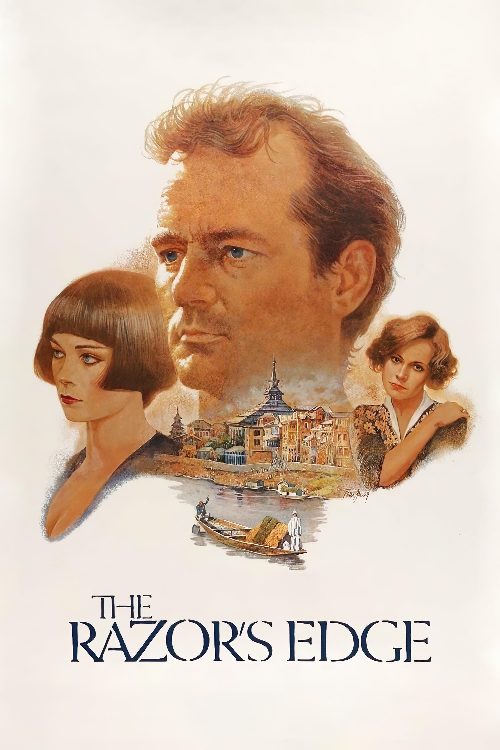
About The Razor's Edge
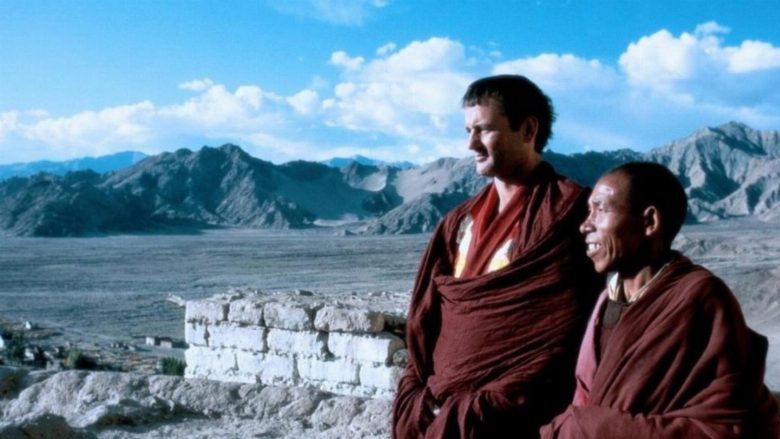
An American WWI veteran undertakes a spiritual quest that takes him from Paris to Nepal to the Himalayas and back to his hometown. Upon his return, he discovers he is not the only one who has changed.
The search for existential meaning has long been a staple of mid-century literature, yet few cinematic adaptations capture the restless spirit of the post-war era quite like the 1984 iteration of The Razor's Edge. Rather than focusing solely on the trauma of the battlefield, the film positions itself as a meditative character study centered on a man whose internal landscape is forever altered by global conflict. This narrative choice elevates the story beyond a typical period piece, transforming it into a somber reflection on the disillusionment that follows a world-shattering event. For audiences accustomed to the high-octane emotional beats of contemporary Indian cinema, where protagonists often grapple with societal expectations and moral duty, this film offers a fascinating look at a different kind of personal odyssey—one defined by isolation and the pursuit of enlightenment rather than communal or family-centric redemption.
Director John Byrum approaches the material with a restrained hand, prioritizing the protagonist’s intellectual evolution over traditional dramatic spectacle. The film navigates the stark contrast between the decadent social circles of Paris and the profound quietude of the Himalayas, creating a visual rhythm that mirrors the main character’s own psychological journey. It is a slow-burn experience that demands patience, making it an ideal selection for viewers who appreciate philosophical dramas that prioritize atmosphere over rapid-fire plot progression. While it lacks the vibrant musicality and expansive narrative scope of the current pan-Indian hits dominating the box office, its focus on the human condition remains universally resonant. The performances anchor this transition from the familiar comforts of home to the unknown corners of the globe, ensuring that the stakes feel intensely personal even as the protagonist traverses continents.
This particular exploration of trauma and self-discovery serves as a precursor to many modern dramas that examine the psychological scars left by history. By contrasting the pursuit of material success with the desire for spiritual truth, the film taps into a timeless human conflict that remains relevant today. It is a sophisticated piece of storytelling that eschews easy answers, preferring instead to linger in the discomfort of uncertainty. Those with an interest in mid-eighties western cinema will find much to admire in its commitment to character development, as it successfully avoids the traps of sentimental melodrama. For the discerning viewer looking to understand the lineage of the spiritual quest trope in film, this work stands as a thoughtful, if demanding, touchstone that challenges the audience to consider what truly constitutes a life well-lived.
Cast(36)