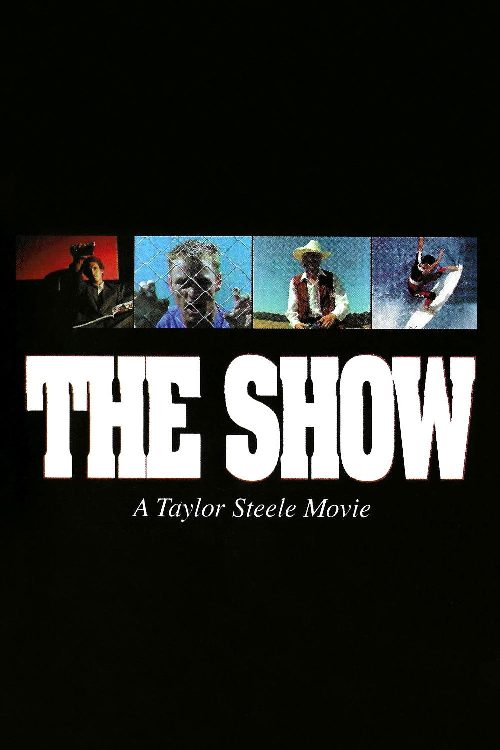
The Show(1997)
About The Show
Greg Browning as a lost space traveler, Chris Malloy as a cowboy, Shane Dorian and Taylor Knox as street thugs, Rob Machado as the Godfather? Sounds more like a night at the local multiplex than one of the greatest surf films of all time.
Long before the era of high definition drone photography redefined the extreme sports genre, Taylor Steele was busy crafting a cinematic language for surfing that prioritized narrative flair over mere technical display. Released in 1997, The Show stands as a definitive artifact of a decade that thrived on the intersection of alternative culture and stylized independent filmmaking. Rather than settling for the standard format of a montage reel set to a pop-punk soundtrack, the project experiments with a structural audacity that feels surprisingly fresh even by today's standards. By weaving scripted thematic segments into the fabric of high-performance wave riding, the production manages to transform a collection of athletic feats into a cohesive, albeit eccentric, piece of pop culture history.
The film is defined by its playful commitment to genre tropes, casting world-class surfers in roles that defy their typical public personas. Seeing athletes like Shane Dorian and Ross Williams step into archetypal characters allows the viewer to engage with the surfing community through a lens of irony and self-awareness. This approach mirrors the broader shifts occurring in the nineties, where the line between athlete and celebrity began to blur, and niche subcultures were increasingly eager to showcase their own mythology. For those who appreciate the aesthetic of the nineties, this movie serves as a time capsule, capturing the raw energy and experimental spirit that characterized the surf industry before it became a heavily polished global enterprise.
Fans of documentary experimentation or those who enjoy seeing professional athletes test their range in unconventional creative environments will find much to admire here. It is an essential watch for cinephiles interested in how niche interest films can push the boundaries of their medium to create something more ambitious than a standard highlight reel. Taylor Steele established his reputation by consistently challenging the status quo of surf media, and this particular project remains a cornerstone of his filmography. It appeals not just to surf enthusiasts, but to anyone curious about the way independent creators of the late twentieth century used limited resources and creative imagination to build immersive, genre-bending worlds that felt entirely their own. By treating the surf trip as a stage for character work, the film remains a unique curiosity that proves how far a little bit of thematic ambition can go when paired with genuine talent and a distinct visual point of view.