
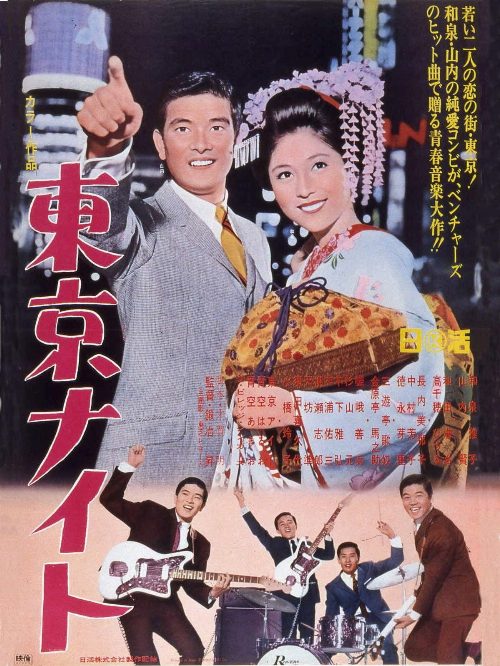
Tokyo Night(1967)
About Tokyo Night
A girl runs away form her house in Kyoto to find fortune in the Japanese capital.
The neon pulse of the late sixties serves as a stark backdrop for the restless ambition captured in Tokyo Night, a film that delves into the stark contrast between the traditional roots of Kyoto and the overwhelming, metallic allure of Japan’s metropolitan heart. Noboru Kaji crafts a narrative that feels remarkably ahead of its time, focusing on a young protagonist who abandons the predictable comforts of her provincial life to pursue elusive dreams within the sprawling labyrinth of the capital city. While the regional cinema of India often explores similar themes of rural migration and the loss of innocence in urban centers, this Japanese period piece offers a more melancholic, atmospheric take on the same universal struggle for identity. It stands out for its deliberate pacing and its refusal to paint the city as a simple beacon of success, choosing instead to highlight the loneliness that often accompanies such a radical life transition.
For enthusiasts of global cinema who appreciate the stylistic shifts of the sixties, Tokyo Night provides a fascinating window into a period of rapid social change. The film is perfectly suited for viewers who enjoy character-driven dramas that prioritize internal conflict over high-octane spectacle. While modern audiences raised on the frenetic energy of contemporary pan-Indian hits might find the rhythm of this work meditative, its emotional resonance remains sharp and accessible. It is less a story about the logistics of starting over and more a study of the psychological toll that comes with shedding one’s past in favor of an uncertain future. The visual language employed by Kaji creates a sense of isolation that feels both intimate and expansive, drawing the audience into the crowded streets alongside the protagonist.
The performances, led by Hizuru Takachiho and Masako Izumi, anchor the film in a grounded reality that prevents it from slipping into melodrama. By focusing on the vulnerability of those who seek to reinvent themselves, the film mirrors the anxieties found in many classic tales of urban aspiration across Asian cinema. It feels like a precursor to the modern wave of films that examine the disconnect between the dreams we carry and the stark realities we encounter in the concrete jungle. Those who value period aesthetics and nuanced storytelling will find this a compelling addition to their watchlist, as it captures a specific moment in Japanese history where the old world and the new were locked in a quiet, transformative struggle. This is a quiet, thoughtful exploration of the human desire to be someone else in a place that does not yet know your name.