About Uncle Buck
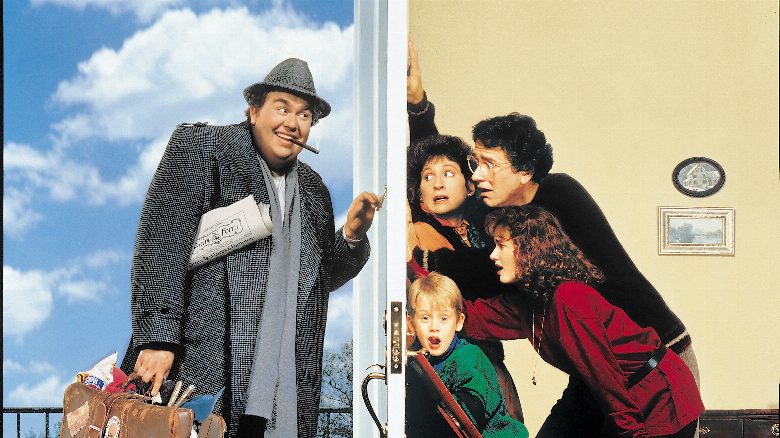
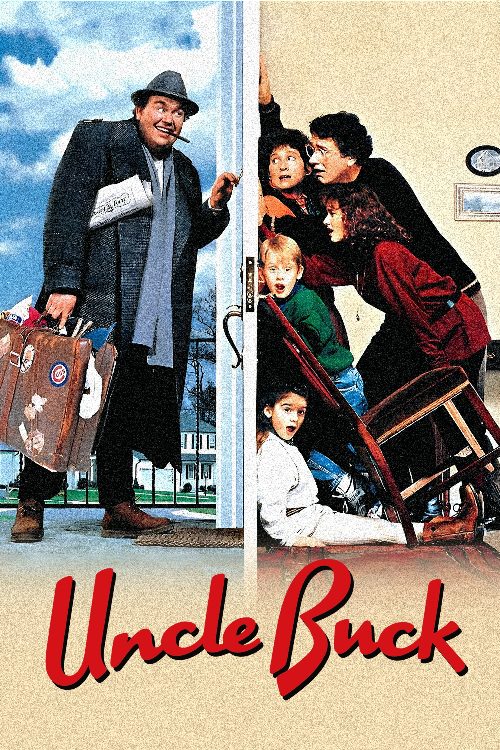
Buck Russell, a lovable but slovenly bachelor, suddenly becomes the temporary caretaker of his nephew and nieces after a family emergency. His freewheeling attitude soon causes tension with his older niece Tia, loyal girlfriend Chanice and just about everyone else who crosses his path.
Few cinematic portraits capture the chaotic friction between bachelorhood and domestic responsibility quite like the 1989 classic Uncle Buck. At the heart of this enduring narrative lies a quintessential odd couple dynamic, where a carefree man whose lifestyle is defined by spontaneity and disarray finds himself thrust into the rigid structure of a suburban household. While contemporary audiences might draw parallels to the high-stakes family dramedies often seen in modern Telugu or Hindi cinema, where the reconciliation of traditional values and individual freedom frequently takes center stage, this film operates as a masterclass in character-driven humor. It moves beyond simple slapstick, grounding its laughs in the very real, often prickly friction that occurs when disparate personalities are forced to navigate a shared living space during a moment of sudden crisis.
The film serves as a definitive showcase for the comedic range of its lead, who transforms a character that could have easily been dismissed as a nuisance into a figure of surprising emotional depth. For viewers accustomed to the polished, high-gloss family entertainers of today, this production offers a refreshingly raw look at the messiness of kinship. It is precisely this lack of artificiality that makes the experience resonate across generations. Whether it is the biting exchanges between the protagonist and his teenage niece or the awkward attempts to integrate his own romantic life into this new, high-pressure environment, the script maintains a delicate balance between cynicism and heart. It is a portrait of a man who is forced to grow up, not because he wants to, but because he is suddenly the only person standing between a family and total collapse.
Fans of character-focused stories who appreciate a narrative that prioritizes growth over spectacle will find much to admire here. The film avoids easy resolutions, choosing instead to let the characters stumble through their misunderstandings in a way that feels authentic to the complexities of real-world relationships. It sits comfortably alongside the best of eighties comedy, serving as a reminder that the most compelling conflicts are rarely external, but rather found in the stubbornness of individuals attempting to coexist. By stripping away the pretense often found in family-centric storytelling, the movie remains an essential watch for anyone interested in the evolution of the comedic anti-hero. Its enduring appeal lies not in its premise, which is straightforward, but in the sincerity with which it explores the transformative power of showing up for the people who matter most, even when you are the least qualified person to do so.
Cast(36)