
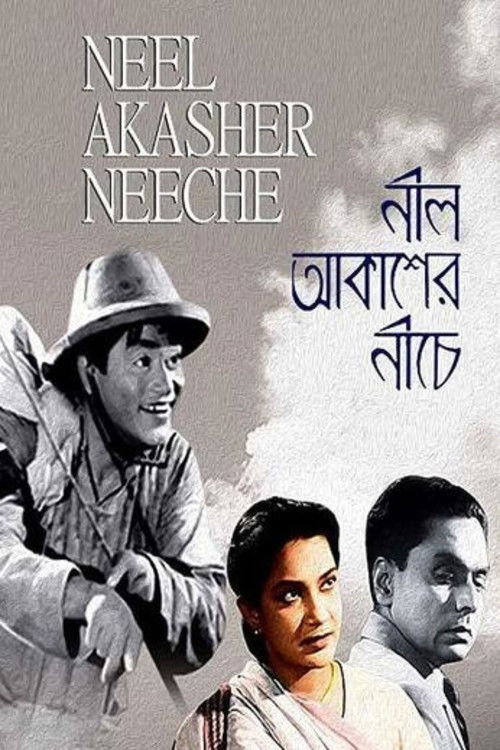
Under the Blue Sky(1959)
About Under the Blue Sky
Set in the turbulent 1930s, this is the story of a poor Chinese hawker selling his merchandise, Chinese silk, in the streets of Calcutta. This was the time when China was repulsing a brutal attack of militarist Japan and when an outraged Rabindranath Tagore wrote to his friend in Japan, the great poet Noguchi: “I wish your countrymen, whom I love so much, not success but remorse”. This film holds the dubious distinction of being the first to be banned (though temporarily) in independent India.
Stepping back into the cinematic landscape of 1959, Under the Blue Sky offers a poignant exploration of colonial era Calcutta, a time when the city functioned as a crossroads for global tensions and local struggles. The narrative centers on a Chinese street vendor navigating the bustling urban landscape, attempting to earn a living through the sale of silk while the echoes of the second Sino-Japanese war reach the subcontinent. By choosing this specific protagonist, the film departs from the conventional domestic dramas that dominated the Bengali industry at the time, opting instead for a character study that highlights the shared humanity between displaced individuals and the local populace. The presence of international cast members alongside local talent creates a unique aesthetic that feels both grounded in historical reality and deeply cinematic.
This production occupies a fascinating space in the history of Indian film, largely due to its bold political stance. By referencing the diplomatic friction between Indian intellectuals and Japanese militarism, the film transcends the boundaries of a simple period piece to become an act of historical commentary. Its temporary suppression by local authorities only adds to its legendary status, marking it as a daring project that challenged the comfort zones of its contemporary audience. For those interested in the evolution of Bengali cinema, this work serves as an essential bridge between the neorealist movements of the era and the growing desire for films that engaged with international geopolitical crises. It remains a vital document for historians and cinephiles alike, reflecting a period when filmmakers felt empowered to use the medium as a direct response to global suffering.
Viewers who gravitate toward atmospheric dramas that prioritize emotional weight over traditional spectacle will find much to admire here. The film is perfectly suited for those who appreciate the intersection of personal struggle and the wider currents of history. It does not merely recount the events of the 1930s but invites the audience to consider the perspective of a stranger in a strange land, a theme that remains profoundly relevant today. Whether you are a dedicated student of classic Indian cinema or simply a fan of stories that capture the resilience of the human spirit amidst geopolitical instability, this film offers a rare look at a forgotten intersection of history. It stands as a testament to a time when directors were willing to risk controversy to draw attention to the plight of the marginalized, ensuring that the legacy of this quiet, impactful drama continues to resonate with modern sensibilities.