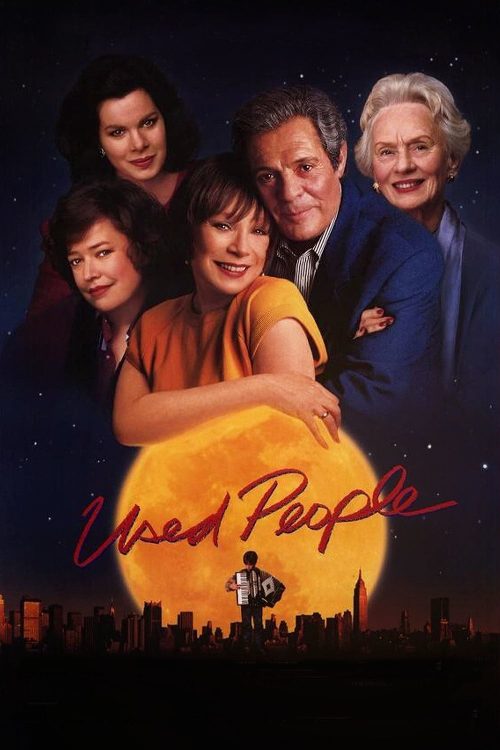
About Used People
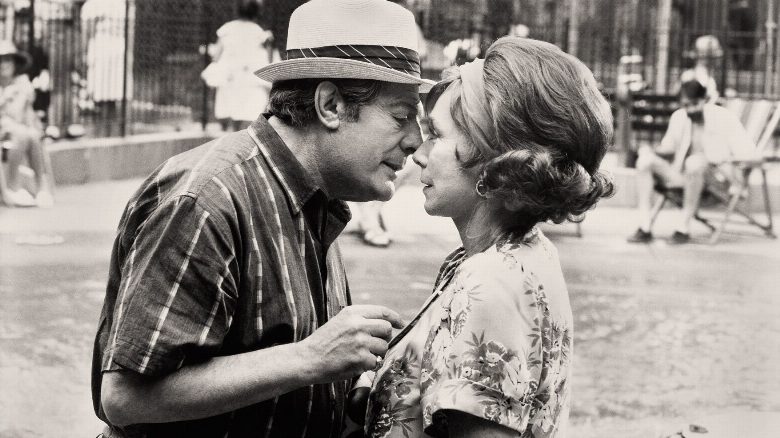
At her husband's funeral, Pearl, Jewish mother of two divorced and antagonistic daughters, meets an old Italian friend of her husband, whose advice years previously had stopped the husband leaving home. For 23 years he, now a widower, has secretly loved Pearl.
The bittersweet cadence of life after loss takes center stage in Used People, a 1992 production that captures the messy, vibrant, and often comedic reality of family dynamics within a tight-knit immigrant community. While modern audiences might be accustomed to the high-octane emotional shifts found in contemporary regional Indian cinema, this film offers a fascinating cross-cultural parallel in its focus on multi-generational domestic upheaval. Much like the family-centric dramas seen in Telugu or Tamil cinema, the narrative centers on a matriarch, Pearl, who finds her life unexpectedly disrupted just as she is attempting to navigate the solemnity of her husband's funeral. The story leans heavily into the idea that life, in all its chaotic glory, rarely respects the boundaries of grief, forcing characters to confront long-held secrets and the inconvenient persistence of romantic desire even in their later years.
The film distinguishes itself through its sharp, character-driven humor, which feels remarkably similar to the dialogue-heavy, ensemble-led comedies that have become a staple in Hindi and Malayalam industries today. By focusing on the friction between Pearl and her two daughters, the script explores the universal tension between parental expectations and the independent lives of adult children. The inclusion of an Italian suitor who has harbored feelings for decades adds a layer of poignant nostalgia that resonates with anyone familiar with the slow-burn romances often depicted in global auteur cinema. It is a film that values human imperfection, presenting its characters not as idealized archetypes but as vulnerable individuals grappling with the weight of their own histories.
Viewers who appreciate films that prioritize nuanced performances over spectacle will find much to admire in this production. The cast brings a grounded, lived-in quality to their roles, moving away from theatricality to favor a more intimate form of storytelling. For those who enjoy the layered domestic storytelling found in the works of directors who highlight the intricacies of the household, this film serves as a compelling study of how past choices ripple into the present. It remains a noteworthy entry for fans of character studies who enjoy watching strong personalities clash, reconcile, and ultimately find connection in the most unpredictable circumstances. Whether one is a seasoned follower of global independent cinema or someone simply looking for an exploration of the complexities of love, this movie provides a thoughtful, humorous, and deeply human perspective on the endurance of the heart.
Cast(17)