

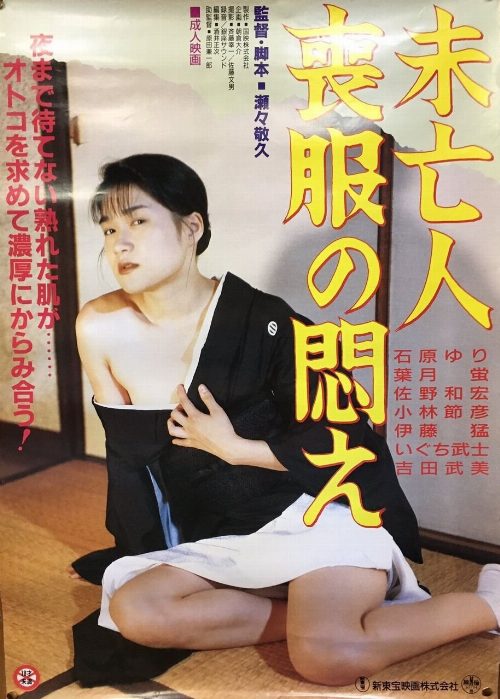
Widow: Bliss in a Mourning Dress(1993)
About Widow: Bliss in a Mourning Dress
The film depicts Nagatoshi, a monk, who is mistaken for the reincarnation of a hero in a small mountain village who looks exactly like him, and who rebels against the government together with the farmers. Unlike its predecessor, which was a period drama in style, this film is more contemporary, incorporating issues such as corruption at a general contractor. The dynamism of the farmers' revolt, with its mass mobilization of extras, is also a highlight of the film.
Takahisa Zeze has long been a filmmaker fascinated by the friction between tradition and modern societal decay, a sensibility that permeates his 1993 feature Widow: Bliss in a Mourning Dress. Rather than relying on the period-piece aesthetics that dominated much of the rural-set cinema of that era, Zeze pivots toward a sharper, more cynical exploration of systemic rot. The narrative centers on a monk named Nagatoshi, a man whose physical likeness to a legendary local savior leads him into a complex web of mistaken identity. This setup provides a clever springboard to examine how communities cling to mythic figures when they feel abandoned by the powers that be, shifting the focus from historical romanticism to the harsh realities of corporate greed and governmental negligence.
The film stands out as a striking example of Japanese independent cinema moving away from the safe confines of folklore to address urgent contemporary anxieties. By weaving the trope of a reluctant messiah into a story about corrupt construction conglomerates and the desperation of the agrarian class, Zeze creates a unique tension. The visual language of the film captures the isolation of the mountain setting, using the rugged geography to mirror the internal struggles of the villagers. Fans of gritty, socially conscious dramas will likely appreciate the way the director balances the high-stakes drama of mass rebellion with the quiet, often unsettling psychological state of his protagonist. It is a work that feels less like a fable and more like a warning, reflecting a period in Japanese industry where the divide between local dignity and industrial exploitation was widening at an alarming rate.
For viewers who enjoy films that challenge authority figures through the eyes of an unlikely outsider, this production offers a compelling experience. The casting of Yuri Ishihara and Kazuhiro Sano provides a grounding presence, allowing the more surreal elements of the mistaken identity plot to feel tethered to human fragility. Zeze manages to orchestrate large-scale sequences that feel both chaotic and purposeful, proving that the director possessed a keen eye for staging even early in his career. While it may not follow the expected trajectory of a traditional hero story, the film is essential viewing for those interested in how rural life is negotiated under the shadow of modern infrastructure development. It remains a provocative piece of cinema that highlights the enduring power of protest when individuals find themselves cornered by institutional corruption.



