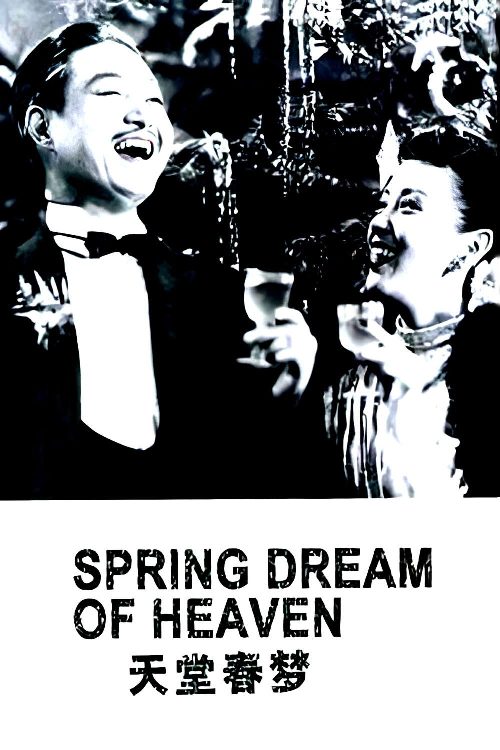
About 天堂春梦
Stepping back into the landscape of post-war Chinese cinema, Tian Tang Chun Meng remains a fascinating artifact that captures the intersection of domestic upheaval and the shifting social fabric of the late 1940s. While many international audiences gravitate toward the more stylized offerings of the period, director Xiaodan Tang delivers a grounded look at household dynamics that feels remarkably modern in its restraint. By focusing on the intimate tensions within a single family unit, the film avoids the grandiosity often associated with historical dramas of that era, choosing instead to anchor its narrative in the quiet struggles of people navigating an uncertain future. This approach mirrors the trends seen in contemporary regional Indian cinema, where filmmakers often use the home as a microcosm to reflect broader political anxieties without losing the emotional core of the characters.
The performance of Shangguan Yunzhu stands out as a particular highlight, providing a nuanced anchor for the film that elevates it beyond a standard melodrama. Her ability to convey internal conflict through subtle gestures makes the viewing experience deeply personal, ensuring that the stakes, though localized, feel monumental to the audience. For those who appreciate the slow-burn storytelling prevalent in the golden ages of Bengali or Malayalam cinema, this film offers a similar depth of character exploration. It is a work for viewers who prioritize atmosphere and psychological realism over high-octane plot twists, rewarding those who pay attention to the unspoken dialogues between family members.
Xiaodan Tang demonstrates a clear command over the pacing, ensuring that the environment itself becomes a character, mirroring the emotional temperature of the protagonists. In the context of global film history, this piece serves as a vital bridge between traditional theatrical influences and the burgeoning realism that would define the next decade of Asian filmmaking. It is positioned as a must-watch for historians and enthusiasts of classic world cinema who want to understand how families maintained their identity during periods of immense transition. By stripping away excess, the film manages to maintain a timeless quality that speaks to the universal human desire for stability in a changing world, making it a compelling discovery for those looking to expand their appreciation of early twentieth-century Eastern storytelling.