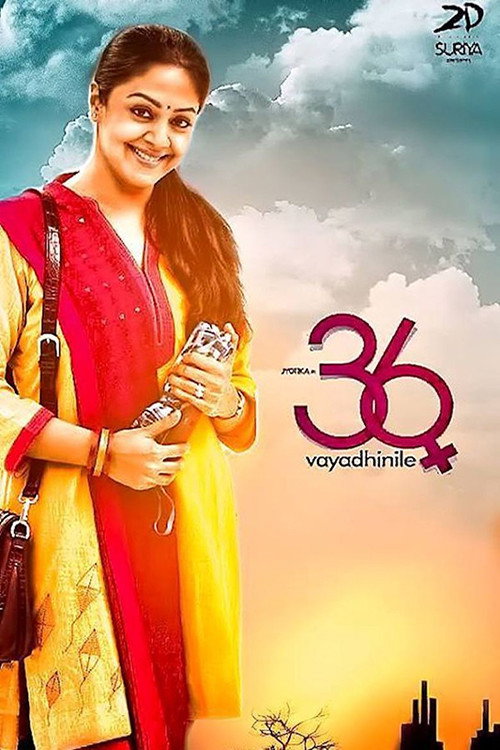
About 36 Vayadhinile
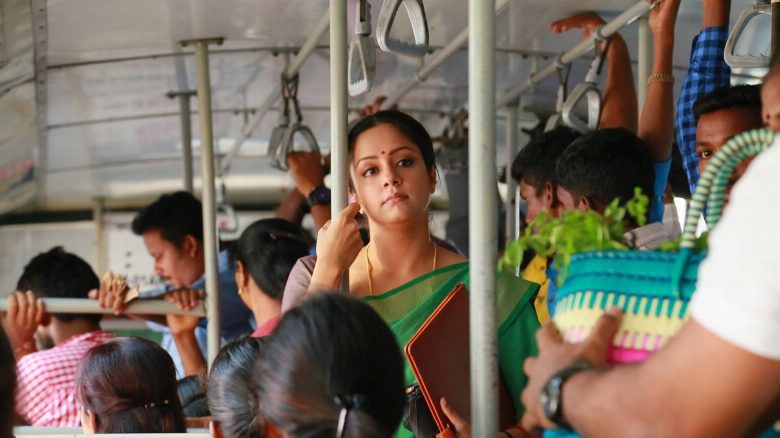
A married woman, who has set aside her dreams for the sake of her husband and daughter, rediscovers her true self and becomes an achiever.
The return of a powerhouse performer to the silver screen often carries an electric anticipation, and few comebacks have resonated as deeply with Tamil audiences as the one orchestrated in 36 Vayadhinile. Marking a pivotal moment in contemporary Kollywood, the film serves as a sophisticated character study that challenges the traditional domestic archetypes often imposed upon middle-aged women in mainstream narratives. By focusing on the quiet erosion of identity within a standard household setting, the story elevates a relatable struggle into a compelling journey of self-actualization. It avoids the trap of being a mere melodrama, instead opting for a grounded portrayal of how societal expectations can inadvertently stifle individual ambition long after the initial bloom of youth has faded.
Jyothika delivers a performance defined by restraint and gradual empowerment, grounding the narrative in an authentic emotional reality that mirrors the experiences of countless women balancing family obligations against suppressed personal aspirations. Her collaboration with Rahman provides a necessary tension, illustrating the subtle disconnect that can grow within a marriage when one partner ceases to be viewed as a multifaceted individual. The film arrives at a time when the Tamil industry has been increasingly willing to experiment with narratives that center on women navigating complex professional and personal landscapes. It stands out by rejecting the loud, exaggerated tropes of commercial cinema, preferring instead to highlight the quiet, incremental victories of a woman reclaiming her voice in a world that has grown comfortable with her silence.
Viewers who appreciate character-driven dramas that prioritize emotional nuance over high-octane spectacle will find much to admire here. It is an essential watch for those interested in the evolving representation of women in Indian cinema, particularly in how it tackles the theme of age as a period of renewed potential rather than decline. By positioning the protagonist as an achiever who finds her strength within the context of her own life, the film offers a refreshing, empowering message that feels both urgent and timeless. It resonates because it does not demand a complete abandonment of one's past life, but rather an expansion of the self to encompass the dreams that were once shelved. This is a thoughtful, poignant exploration of identity that manages to be both a critique of domestic complacency and a celebration of individual resilience.