Agatha Didn't Kill Her Psychiatrist(2026)
About Agatha Didn't Kill Her Psychiatrist
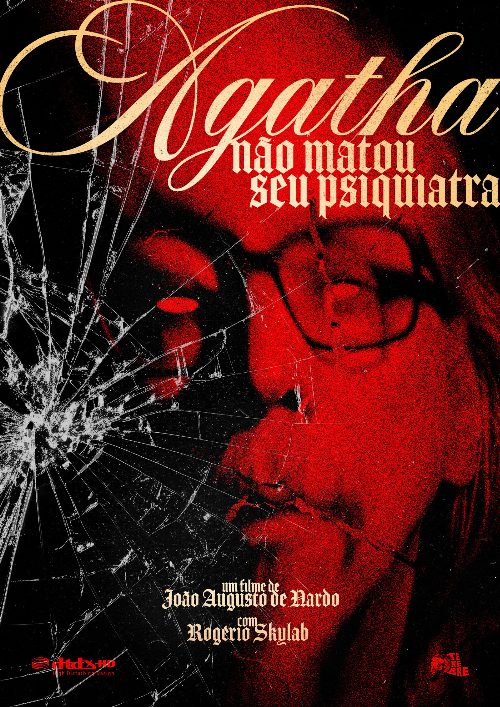
In a therapy session, secrets emerge, turning the encounter between Ágatha and her psychiatrist into a dangerous psychological game.
The landscape of contemporary international horror is shifting away from jump scares toward the claustrophobic tension of the conversational thriller, a trend perfectly captured by the upcoming 2026 release Agatha Didnt Kill Her Psychiatrist. Directed by Joao Augusto de Nardo, this Portuguese production strips away the supernatural frills often found in genre cinema to focus entirely on the volatile alchemy between two people locked in a confined space. By centering the narrative on the intricate power dynamics of a clinical environment, the film challenges the viewer to discern who holds the upper hand in a mental health setting that quickly curdles into a high-stakes psychological chess match. It is a bold departure from traditional scare tactics, opting instead for a slow-burning dread that relies heavily on the nuanced performances of Mariana Rodrigues and the enigmatic presence of Rogerio Skylab.
For fans of Indian cinema who have grown accustomed to the high-intensity dramas and twist-heavy thrillers coming out of the Malayalam and Tamil industries, this film offers a fascinating cross-cultural parallel. Much like the best modern Indian suspense films that prioritize atmosphere and character evolution over spectacle, De Nardo utilizes the intimacy of his setting to dissect the human psyche. The film appears to position itself as a cerebral experience, making it an ideal choice for audiences who appreciate films that demand their full attention. It speaks to a global appetite for stories that delve into the darkness of the mind, mirroring the shift we see in regional Indian films that are increasingly moving toward grounded, character-driven narratives rather than relying solely on grand action set pieces.
The casting of Rogerio Skylab, a figure known for his unconventional artistic trajectory, adds an extra layer of unpredictability to the project. When paired with the compelling range displayed by Mariana Rodrigues, the film becomes a showcase for how minimalist staging can produce maximum impact. Viewers who gravitate toward psychological studies, or those who enjoy the tension found in films where the dialogue is as sharp as a blade, will likely find this work deeply engaging. It serves as a stark reminder that the most terrifying monsters are often those we imagine for ourselves during moments of extreme vulnerability. As the story unfolds, the ambiguity regarding the protagonist's true intentions keeps the tension simmering, ensuring that the audience remains guessing about the nature of the truth until the very final frame.