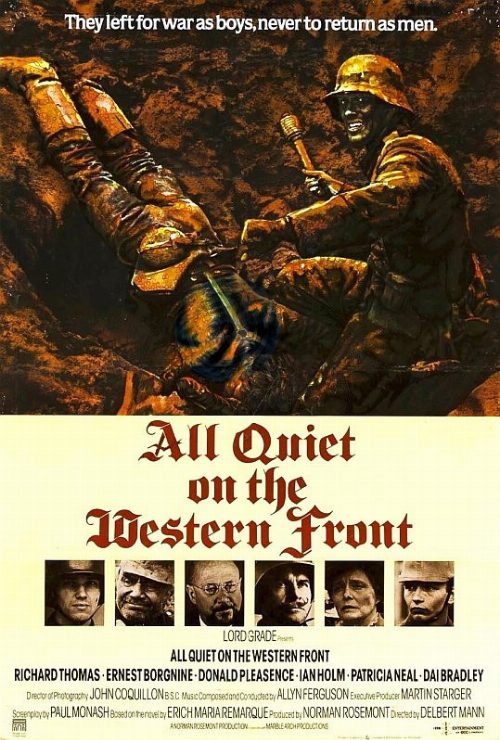
All Quiet on the Western Front(1979)
About All Quiet on the Western Front
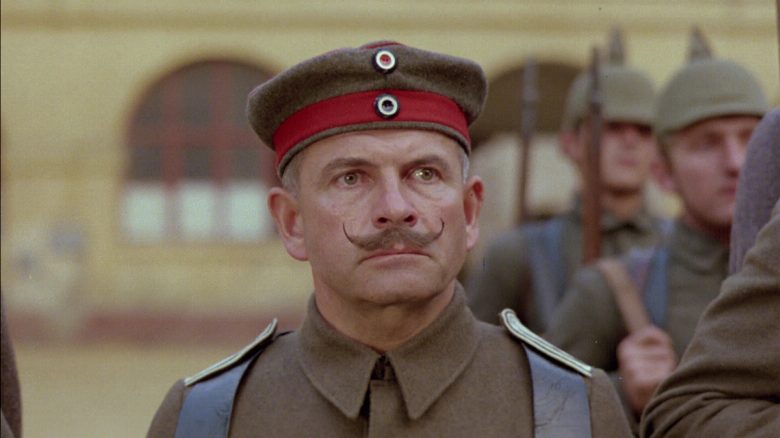
At the start of World War I, Paul Baumer is a young German patriot, eager to fight. Indoctrinated with propaganda at school, he and his friends eagerly sign up for the army soon after graduation. But when the horrors of war soon become too much to bear, and as his friends die or become gravely wounded, Paul questions the sanity of fighting over a few hundreds yards of war-torn countryside.
Few cinematic portrayals of conflict manage to capture the tragic erosion of youthful idealism with the same stark clarity found in the 1979 adaptation of All Quiet on the Western Front. While modern audiences often associate war epics with the high-octane spectacle of contemporary blockbusters, this television production leans into a somber, character-driven intimacy that feels increasingly rare. By focusing on the psychological disintegration of Paul Baumer, the film serves as a timeless cautionary tale about the disconnect between nationalistic fervor taught in classrooms and the visceral, mud-caked reality of trench warfare. It stands as a poignant reminder that the most devastating casualties are often the dreams and innocence of a generation pushed into the meat grinder of industrial-scale combat.
For viewers accustomed to the sprawling, hyper-realistic aesthetics of modern Indian cinema, which has recently excelled at blending historical gravity with grand emotional stakes, this vintage piece offers a different, more claustrophobic perspective. It eschews the celebratory tone sometimes found in war dramas, opting instead for a relentless examination of how dehumanization functions on the front lines. The casting of Richard Thomas brings a vulnerable, approachable quality to the lead role, while veterans like Ernest Borgnine and Ian Holm provide a gravitas that anchors the chaotic despair of the narrative. It is an essential watch for those who appreciate cinema that prioritizes human fragility over tactical maneuvers, appealing specifically to fans of introspective dramas that explore the philosophical absurdity of organized violence.
The film remains a cornerstone of the genre because it refuses to glorify the soldiering experience, choosing instead to strip away the veneer of heroism. In an era where media consumption is often dominated by rapid pacing and stylized action, the deliberate, slow-burn tragedy of this production commands a different kind of attention. It invites the audience to sit with the silence between artillery blasts, highlighting the futility of fighting for patches of earth that hold no strategic value beyond the lives lost to claim them. For cinephiles interested in the evolution of how we depict global conflicts, this version remains a foundational text. It continues to resonate with anyone who understands that the true cost of war is not just measured in territory, but in the permanent loss of a future that never had the chance to bloom.
Cast(33)