About Beauty of Beauties
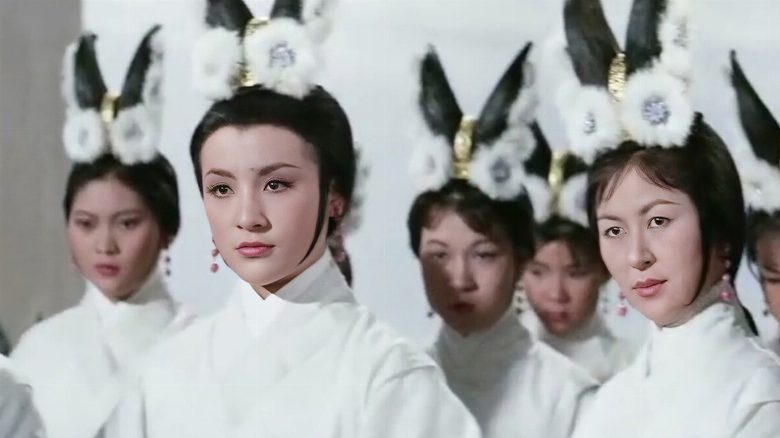
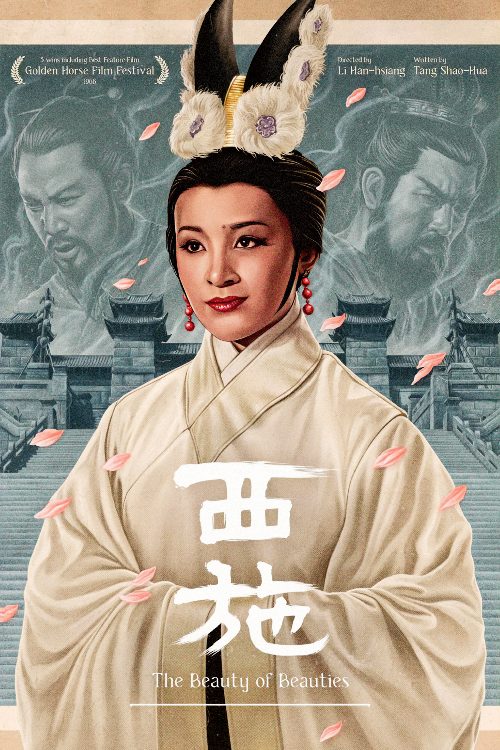
Hsi Shih: The Beauty of Beauties was one of the most ambitious films made in the Taiwan film industry in the 1960s. After leaving The Shaw Brothers studio in Hong Kong and moving to Taiwan, filmmaker Li Han-hsiang mounted this historical epic. Told through the story of Xishi (Hsi Shih), one of the 'Four Great Beauties' of Chinese history, the film portrays the war between two Chinese Kingdoms during the Warring States Period (475-221 B.C). After the kingdom of Yue is defeated by the kingdom of Wu, King Goujian of Yue takes pains to prepare for his revenge and rebuild his country. Knowing that King Fucha of Wu is lewd and lustful, he offers Xisi to the court of Wu to serve as Fucha’s concubine, with Fucha unaware that she is also a spy. She uses her charm to draw Fucha away from his office and governance, while King Goujian rallies his forces together to attempt to reclaim his lands.
The visual grandeur of 1960s Taiwanese cinema finds its definitive statement in Beauty of Beauties, a sprawling historical tapestry that remains a landmark of the era. Directed by the visionary Li Han-hsiang, this production marked a significant transition in the filmmaker's career as he brought his refined aesthetic sensibilities from the Hong Kong studio system to a new, ambitious canvas in Taiwan. By chronicling the legendary life of Xishi, one of the most celebrated figures in ancient Chinese history, the film delves into the intersection of political strategy and personal sacrifice. It is a classic tale of a kingdom brought to its knees, where the battlefield is not merely defined by infantry and iron, but by the subtle, calculated influence of a woman caught between her loyalty to her home and her role as a pawn in a royal power struggle.
For viewers who appreciate the ornate period dramas common in global cinema, this film offers a fascinating look at how mid-century filmmakers utilized wide-screen cinematography to convey the weight of history. Much like the intricate period epics that continue to captivate audiences in the contemporary Indian film industry, Beauty of Beauties relies on a blend of opulent production design and high-stakes character dynamics to keep the audience invested. The narrative captures the tension between the defeated Yue state and the dominant Wu kingdom, framing the central romance not as a traditional love story, but as a dangerous game of espionage. Those who enjoy historical sagas that emphasize the strategic maneuvers of kings and the hidden influence of court figures will find this exploration of the Warring States period particularly compelling.
Li Han-hsiang was renowned for his meticulous attention to detail, and this project serves as a testament to his ability to blend epic scale with intimate human tragedy. The film stands out because it avoids the traps of simple hero-villain narratives, instead choosing to highlight the moral ambiguity of its central players. Whether you are a dedicated enthusiast of classic international cinema or a student of film history interested in the evolution of Eastern epics, this work provides a masterful lesson in pacing and atmosphere. It remains a essential piece of the Taiwanese film heritage, showcasing the technical prowess and storytelling ambition that defined one of the most influential directors of his generation.