About Bizet: Carmen
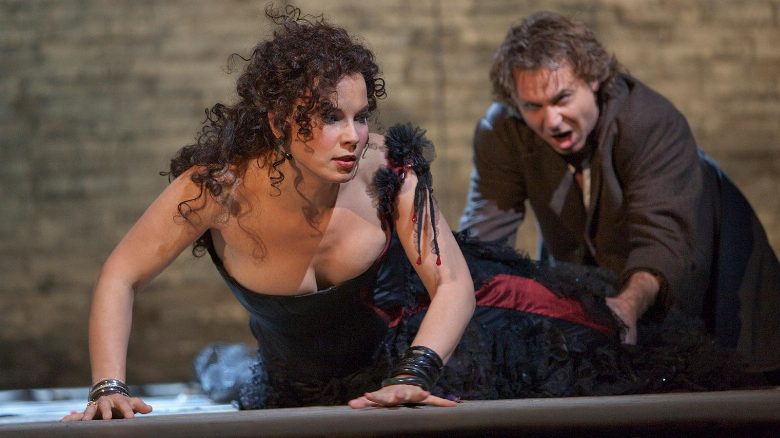
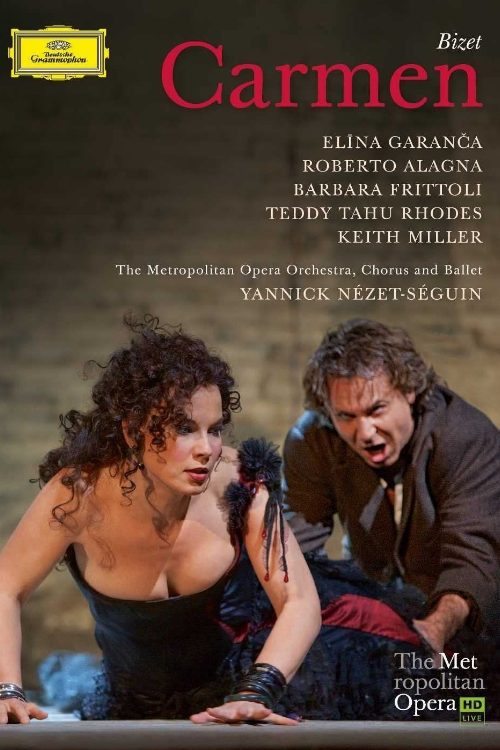
Richard Eyre’s stunning new production of Bizet’s opera was the talk of the town when it was unveiled on New Year’s Eve 2009. Elīna Garanča leads the cast as the iconic gypsy of the title—a woman desired by every man but determined to remain true to herself. Roberto Alagna is Don José, the soldier who falls under her spell and sacrifices everything for her love, only to be cast aside when the toreador Escamillo (Teddy Tahu Rhodes) piques Carmen’s interest. With dances created by star choreographer Christopher Wheeldon and conducted by rising maestro Yannick Nézet-Séguin, this Carmen brings every aspect of Bizet’s tale to thrilling life, from its lighthearted beginning to its inevitably tragic climax.
Few operatic figures have captured the global imagination quite like the defiant heroine at the center of this 2010 production, a staging that breathes visceral urgency into a timeless narrative of obsession and autonomy. While the Indian film industry has long mastered the art of musical storytelling through elaborate song and dance sequences, this French language performance offers a starkly different, yet equally intense, exploration of the destructive power of desire. By stripping away the artifice often associated with traditional period pieces, director Richard Eyre focuses on the volatile chemistry between a free-spirited woman and the man whose life unravels the moment he encounters her. It serves as a fascinating study for cinephiles who appreciate how theatrical staging can translate the raw emotional stakes of a screenplay into something far more visceral and immediate.
Elina Garanca delivers a performance defined by a fierce commitment to character, portraying a protagonist who refuses to be possessed, which creates a magnetic friction against the soldier Don Jose, played by Roberto Alagna. The production is elevated by the choreography of Christopher Wheeldon and the sharp, rhythmic leadership of conductor Yannick Nezet-Seguin, who ensure the pacing never falters despite the heavy dramatic weight of the material. For those accustomed to the grand emotional arcs found in contemporary Telugu or Hindi cinema, the descent of Don Jose from duty to obsession will feel hauntingly familiar, even if the musical language remains distinctively European. It is a masterclass in tension, demonstrating how a singular, well-defined conflict can sustain an entire narrative without the need for peripheral subplots.
This film is a must-watch for audiences who value high-stakes drama and the intersection of music with character-driven storytelling. It is not merely a documentation of a stage show but a cinematic experience that captures the granular details of a toxic romance. Viewers who enjoy films that prioritize the psychological evolution of their leads over spectacle will find much to admire here. By focusing on the fatal allure of the title character and the tragic vulnerability of those who orbit her, the production remains a pillar of 21st-century opera on screen. It stands as a testament to the enduring relevance of classic tales when they are handled with such precision and artistic ambition, offering a sophisticated alternative to mainstream dramas that rely on more conventional tropes.
Cast(11)