About Caddyshack II
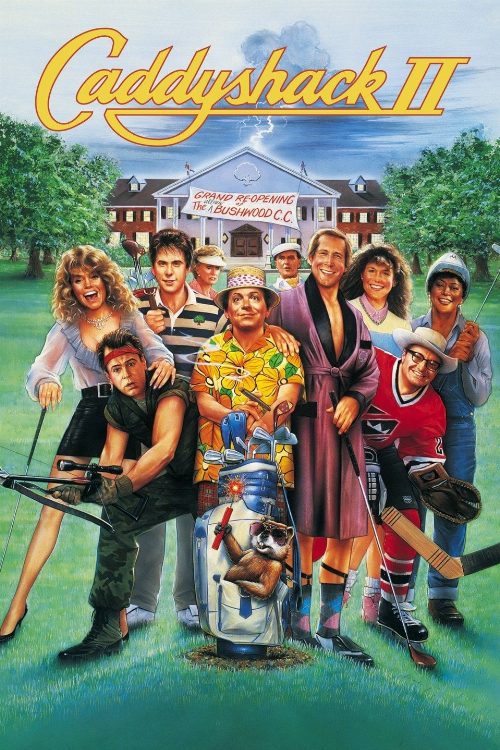
When a crass new-money tycoon's membership application is turned down at a snooty country club, he retaliates by buying the club and turning it into a tacky amusement park.
The landscape of eighties comedy is frequently defined by the high energy antics of Saturday Night Live alumni, and Caddyshack II serves as a quintessential, if distinct, artifact of that era. While the original film captured a specific lightning in a bottle through its chaotic improvisational spirit and cult status, this follow up pivots toward a more structured narrative concerning class friction and the absurdity of social gatekeeping. By centering the story on an outsider whose brash approach to wealth clashes with the established, rigid traditions of an exclusive country club, the movie leans into the classic trope of the nouveau riche disrupting the status quo. It functions as a time capsule of Hollywood humor from that period, relying heavily on the established comedic personas of its headliners to drive the conflict between pretension and pure, unadulterated spectacle.
For viewers who appreciate the specific brand of slapstick and satirical social commentary common in American cinema from the late eighties, this production offers a look at how studios attempted to recapture the magic of earlier hits by leaning into larger than life characterizations. It is not necessarily trying to be a nuanced drama, but rather a vehicle for the comedic timing of performers like Chevy Chase and Dan Aykroyd. Fans of the ensemble comedy format will likely find interest in the way these actors navigate a script that prioritizes escalating mayhem over grounded realism. Even for audiences familiar with modern Indian cinema, which often explores themes of class disparity and societal rigidities with more emotional weight, there is a recognizable universal appeal in seeing an underdog challenge the snobbery of the elite with a total lack of decorum.
The film serves as a reminder of how comedy trends evolve, moving from the anarchic, character driven bits that defined its predecessor to a more polished, big budget aesthetic that was becoming common as the decade drew to a close. While it occupies a different space than the gritty or high stakes narratives currently dominating global box offices, its exploration of status and territory remains a relatable foundation. Those seeking a lighthearted watch that focuses on the clash between old money sensibilities and a disruptive newcomer will find the central premise both nostalgic and straightforward. It is a piece of pop culture history that showcases the sheer star power that defined North American comedy during a pivotal decade, inviting audiences to reflect on how we view the intersection of wealth, access, and the desire to belong.
Cast(43)