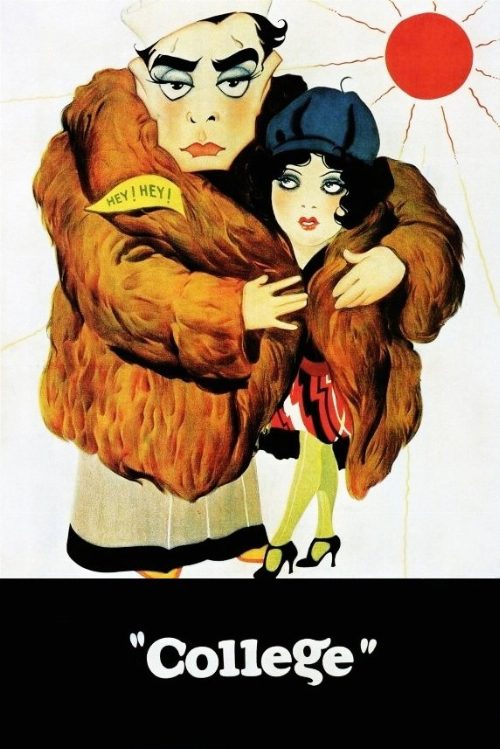
About College
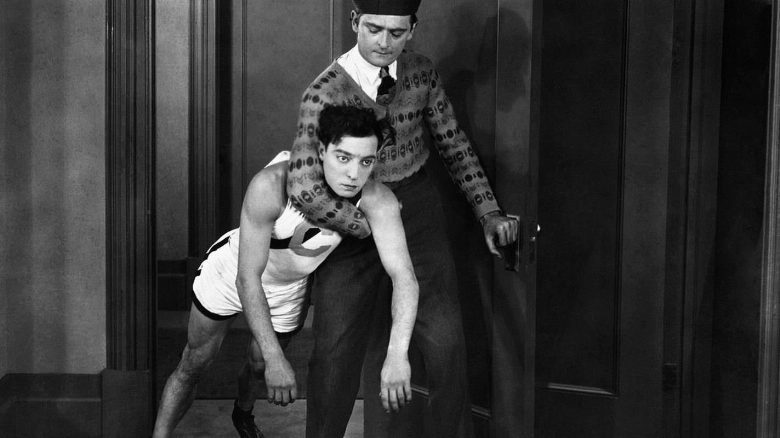
A bookish college student dismissive of athletics is compelled to try out sports to win the affection of the girl he loves.
Buster Keaton remains a titan of silent cinema whose influence on physical comedy spans generations, and his 1927 feature College stands as a fascinating intersection of intellectual ambition and the era of collegiate obsession. While modern audiences often associate the silent film period with melodrama, Keaton injected a distinct layer of observational humor into this narrative. He portrays a brilliant young man who views physical prowess as a triviality, only to find himself navigating a social landscape where athletic status dictates romantic success. By pitting a protagonist defined by his library habits against the rigid hierarchies of university life, the film captures a timeless tension between scholarly merit and the performative nature of popularity.
In the context of film history, this project serves as a sophisticated evolution of the slapstick traditions that defined the twenties. Unlike many of his contemporaries who relied on chaotic setups, Keaton utilized the academic setting to explore the awkwardness of social climbing and the lengths to which a person will go to impress a potential partner. For viewers who appreciate the precision of early cinema, the film offers a masterclass in timing and spatial awareness. The comedy is rarely mean-spirited, instead leaning into the vulnerability of a lead character who must desperately learn to balance his books with the unexpected demands of the track and field circuit. It is a quintessential underdog story that manages to be both a romance and a biting critique of institutional expectations.
This work is particularly recommended for cinema enthusiasts who enjoy tracking the evolution of the romantic comedy genre. While the industry has shifted immensely since the silent era, the core dynamic of the unlikely suitor struggling to fit into an intimidating social environment remains a staple of global storytelling, including the vibrant university dramas currently produced across the Indian film industries. Keaton’s ability to convey complex emotional beats through physical movement alone ensures that the film transcends the language barriers of its time. Whether you are a scholar of silent comedy or simply looking for a lighthearted look at the pursuit of love, this film provides a charming window into how early filmmakers turned simple human insecurities into high-stakes entertainment. Its enduring appeal lies in the relatable struggle of wanting to be enough for someone else while simultaneously trying to discover one's own hidden strengths.
Cast(19)