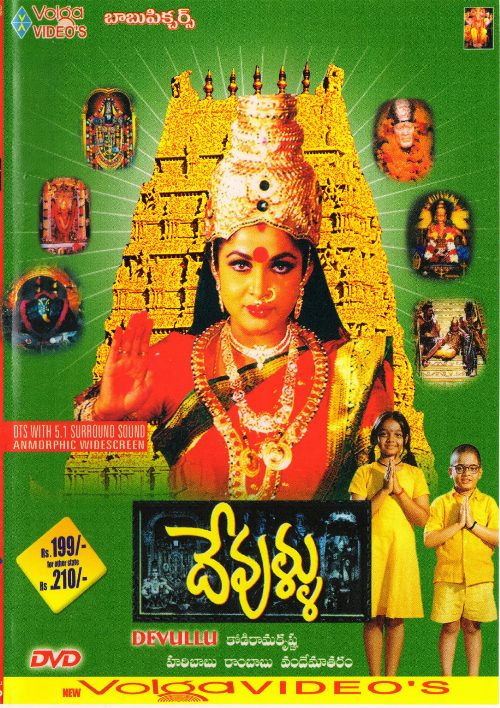
Devullu(2000)
About Devullu
Two children whose parents are about to get divorced visit seven holy shrines at their grandmother's behest who believes the gods are angry with her because she did not fulfill her promise.
Devullu remains a quintessential piece of Telugu devotional cinema, capturing a specific era in Tollywood where mythology and family drama were seamlessly interwoven to resonate with a wide audience. Released at the turn of the millennium, this film holds a nostalgic place in the hearts of viewers who grew up during a time when mainstream cinema frequently explored themes of faith, karma, and the preservation of domestic unity through divine intervention. By centering the narrative on the innocence of children attempting to mend their parents fractured marriage, the story taps into a deep rooted cultural belief that spiritual devotion serves as a final sanctuary when earthly solutions fail. It distinguishes itself by moving away from grand epics to focus on a relatable, grounded struggle, making the supernatural elements feel surprisingly intimate rather than distant or grandiose.
The ensemble cast features stalwarts like S. P. Balasubramaniam, Ramya Krishnan, and Rajendra Prasad, whose collective presence elevates the material beyond a simple moral fable. Seeing such seasoned performers inhabit roles that represent various deities adds a layer of gravitas that was common in the regional cinema of that period. The film belongs to a tradition of devotional dramas that aimed to reinforce traditional values while offering a visual spectacle through its depiction of pilgrimage and ritual. For contemporary audiences, it serves as a fascinating time capsule of the year 2000, showcasing how the industry balanced the evolving tastes of a modernizing society with a persistent reverence for heritage and religious storytelling.
This production is particularly well suited for viewers who enjoy sentimental narratives that prioritize emotional stakes over high octane action sequences. It is an ideal watch for those interested in exploring the evolution of the Telugu film industry or for anyone who appreciates stories that highlight the strength of childhood faith against the backdrop of adult turmoil. The film occupies an interesting niche where it functions simultaneously as a family entertainer and a cultural artifact, illustrating how regional cinema utilizes mythological tropes to address contemporary domestic challenges. Whether one is a long time enthusiast of South Indian cinema or a newcomer curious about the stylistic choices of the early two thousands, the film offers a sincere look at a genre that played a pivotal role in shaping the moral and entertainment landscape of its time.
Cast(19)