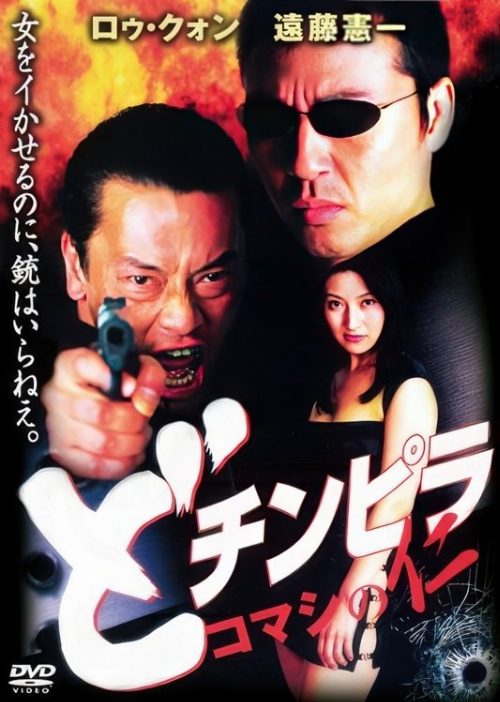
Dochinpira: Jin the Gigolo(2001)
About Dochinpira: Jin the Gigolo
The man has returned to his old town: Jin Kaito (Lo Kwon), known as “Jin the Gigolo”. “Make every woman happy” is Jin’s motto. In his hands, any woman melts into ecstasy, led to heavenly heights of pleasure she’s never known. Waiting for this love-and-peace-driven man is his old yakuza acquaintance, Minoh (Kenichi Endō). The boss’s daughter, Maki (Koharu Tono), has been kidnapped by a rival gang, and Minoh begs the newly returned Jin for help, which he immediately refuses, but when it’s revealed that he had slept with Maki just before the abduction, things spiral out of control. Now, Jin is dragged into a full-blown rescue operation!
The neon-drenched underworld of early millennium Japanese cinema often thrived on blending gritty criminal stakes with the unexpected charisma of unconventional protagonists. Dochinpira: Jin the Gigolo serves as a quintessential example of this stylistic marriage, positioning a protagonist whose primary skill set involves romance rather than combat at the center of a volatile yakuza turf war. While Indian audiences are accustomed to the larger-than-life savior tropes seen in Telugu or Tamil commercial cinema, this film offers a fascinating cross-cultural contrast by stripping away the traditional hero archetype. Instead of a brooding, hyper-masculine enforcer, we follow a man whose philosophy revolves around hedonism and fleeting pleasure, yet finds himself forced into a high-stakes rescue mission that defies his self-imposed neutrality.
This 2001 production captures a specific era of Japanese genre filmmaking where the lines between dark comedy, erotica, and hard-boiled crime thrillers were frequently blurred. For viewers who appreciate the nuanced character studies found in contemporary Malayalam or indie Hindi dramas, the film provides an intriguing look at how personal histories and past transgressions can dismantle a carefully constructed lifestyle. Lo Kwon delivers a performance that leans heavily into the absurdity of the premise, navigating the dangerous intersections of gang politics with a nonchalance that feels strikingly modern. The narrative tension escalates not through elaborate action sequences, but through the realization that Jin cannot escape the consequences of his romantic entanglements, effectively forcing a collision between his private life and the brutal reality of local crime syndicates.
This project is best suited for fans of cult cinema who enjoy stories that refuse to fit neatly into a single box. It stands as a testament to the versatility of the crime genre, proving that even a character defined by his detachment from responsibility can become a compelling lead when the narrative stakes become personal. By centering the conflict on a kidnapping that forces a reluctant, pleasure-seeking individual into the firing line, the film explores the irony of a man who makes others happy suddenly becoming the target of lethal animosity. It remains an offbeat, engaging watch that highlights the creative freedom of the Japanese film industry at the turn of the century, offering a sharp, stylized experience for those who prefer their underworld sagas with a side of irony and unexpected heart.