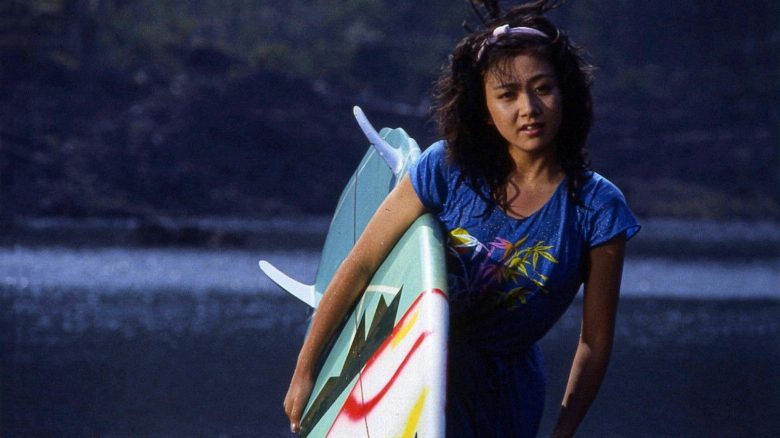

About Eve's Flower Petal
A young woman wanders aimlessly around a beach resort and has sex with various men.
Shun Nakahara crafted a delicate yet provocative exploration of human connection with his 1984 feature Eve's Flower Petal, a film that captures the transient nature of intimacy against the backdrop of Japanese beach culture. Unlike the more conventional romances of the era, the story centers on a protagonist who navigates a series of fleeting encounters with a sense of detachment that feels remarkably modern. By focusing on her internal state rather than external judgment, the director highlights the fluidity of desire and the existential search for meaning in a landscape defined by sun, sand, and temporary visitors. It remains a fascinating artifact of eighties independent cinema, offering a gaze that is both observational and deeply atmospheric.
The film occupies a unique space in the history of Japanese romantic dramas, eschewing traditional narrative arcs for a more impressionistic approach. While contemporary audiences might draw comparisons to the mood-driven works of the French New Wave, the production maintains a distinctly Japanese sensibility, particularly in how it utilizes its coastal setting to mirror the protagonist's emotional state. Viewers who appreciate character-led studies that prioritize mood and subtext over plot-heavy scripts will find much to admire here. It is not a film that seeks to provide easy answers about the choices its lead character makes; instead, it invites the audience to observe the nuances of her interactions and the silent tensions that define her journey through the resort town.
For those interested in the evolution of Japanese filmmaking during the mid-eighties, this title serves as an essential look at how directors began to push the boundaries of genre storytelling. Saeko Kizuki delivers a performance that requires immense vulnerability and restraint, grounding the film in a reality that could have easily drifted into melodrama. As a piece of cinema, it is positioned for viewers who enjoy atmospheric, slow-burn stories that challenge societal norms regarding romance and solitude. Even decades later, the film persists as a thoughtful investigation into the ways people attempt to fill the voids in their lives through the company of strangers, making it a compelling watch for anyone studying the shifting perspectives on personal autonomy in classic world cinema.
Cast(7)




Crew
Director of Photography
Assistant Director
Editor
Lighting Director
Art Direction
Director
Screenplay
Original Music Composer
Similar Films