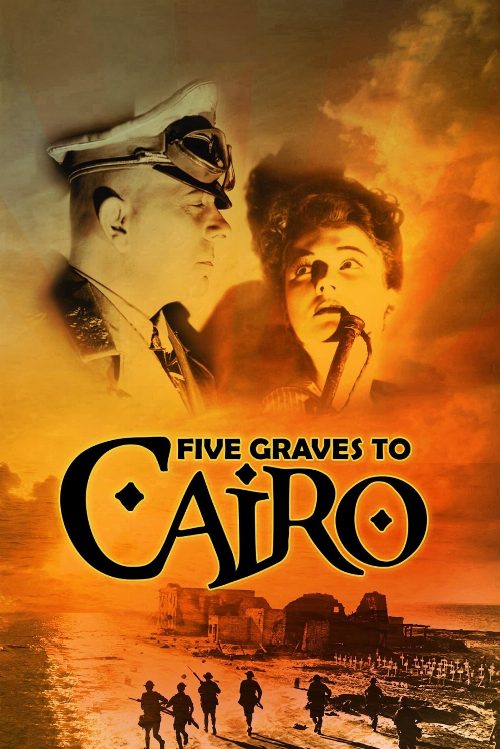
About Five Graves to Cairo
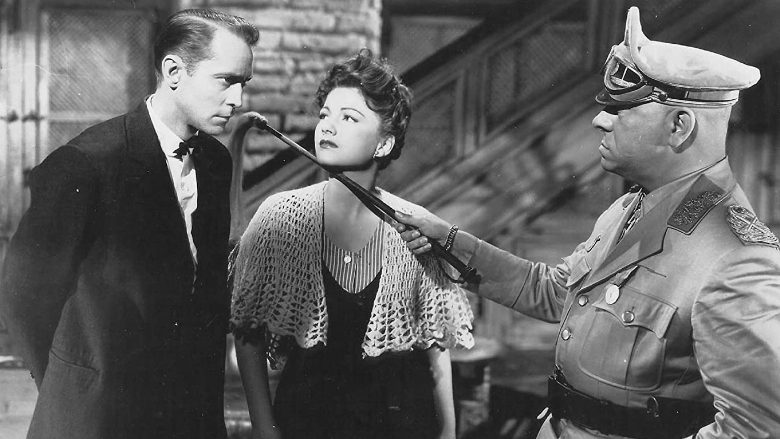
During the 1942 North African campaign, a British straggler passes as a waiter at the hotel commandeered as Erwin Rommel's headquarters. He has thoughts of assassinating Rommel but his cover may provide an even better use.
The sands of the North African desert serve as a volatile stage for one of the most clever cat and mouse games in the history of wartime suspense cinema. Set against the backdrop of the 1942 conflict, Five Graves to Cairo strips away the typical bombast of military epics to focus on a high stakes psychological duel inside a solitary, commandeered hotel. Billy Wilder, who directed this feature long before he became synonymous with legendary Hollywood noir and comedy, demonstrates a remarkable ability to turn a confined environment into a pressure cooker of shifting loyalties and hidden identities. By placing an unassuming British soldier in the role of a waiter serving high ranking German officers, the film masterfully exploits the tension of a protagonist who must remain invisible while standing at the very center of his enemy's inner circle.
This production stands out for its sharp departure from standard propaganda of the era, favoring intricate tactical maneuvering over simple battlefield heroics. For fans of modern Indian cinema, the film offers a fascinating historical parallel to the high tension spy thrillers that currently dominate streaming platforms in the Telugu and Hindi markets. The narrative structure, which hinges on the protagonist gathering intelligence rather than engaging in open warfare, mirrors the cerebral approach found in contemporary espionage dramas where the weapon of choice is information rather than artillery. It is a compelling study in how to sustain suspense through dialogue and atmosphere, proving that the most effective battles are often those fought in the shadows of a dining room.
Viewers who appreciate the methodical pacing of classic noir will find this project particularly rewarding, as it relies on the subtle flickers of suspicion and the constant threat of exposure. Franchot Tone delivers a grounded performance as the man caught in a precarious double life, providing a necessary anchor for a plot that perpetually threatens to derail into discovery. The film is an essential watch for those interested in the evolution of the thriller genre, as it showcases the early stylistic flair of a filmmaker who would go on to shape the language of global suspense. Whether you are a dedicated history buff or a casual viewer looking for a masterclass in tension, this story remains a sharp, sophisticated entry that eschews clichés in favor of genuine intellectual engagement.
Cast(25)