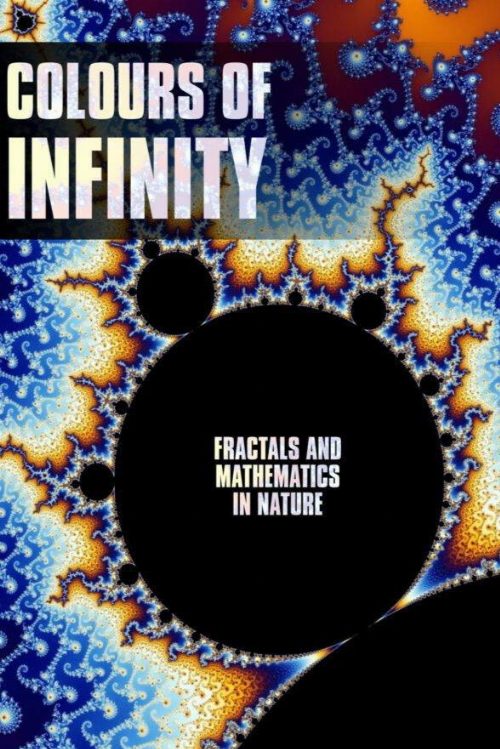
Fractals: The Colors of Infinity(1995)
About Fractals: The Colors of Infinity
Explores the revolutionary world of Fractal Geometry - its far-reaching and often unexpected implications - its powerful and revolutionary applications.
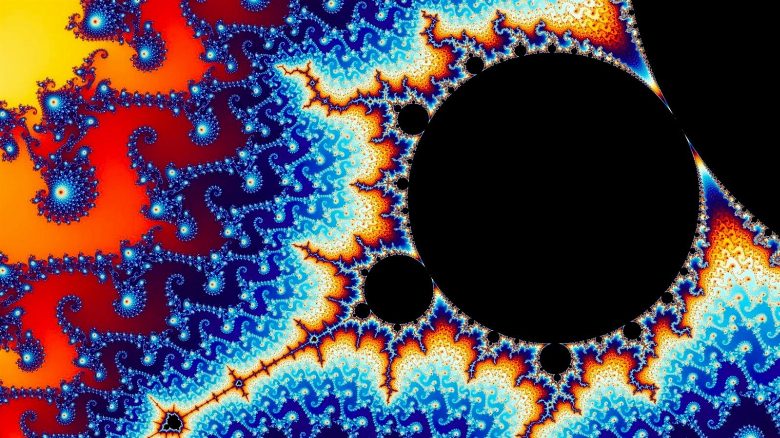
Visualizing the invisible through the language of mathematics, Fractals: The Colors of Infinity stands as a landmark bridge between abstract theory and aesthetic wonder. While many documentaries from the mid-nineties struggled to translate complex scientific concepts for a general audience, Nigel Lesmoir-Gordon opts for a sensory-rich approach, transforming the rigid geometry of the natural world into a hypnotic, kaleidoscopic display. By focusing on the pioneering work of Benoit B. Mandelbrot, the film elevates a niche technical subject into a philosophical exploration of how order emerges from chaos. It captures a specific moment in intellectual history where the intersection of computing and classical physics began to fundamentally alter our perception of the environment, moving beyond simple Euclidean shapes to reveal the repeating, intricate patterns that define everything from coastlines to human lungs.
The film serves as an essential viewing experience for those interested in the history of science and the evolution of digital visualization. Its inclusion of heavyweights like Stephen Hawking and Arthur C. Clarke adds a layer of intellectual gravitas that is rare for a documentary of this vintage. For fans of Indian cinema, who are often accustomed to the grand emotional arcs and sweeping narratives of Tollywood or Bollywood, this documentary offers a different kind of spectacle. It invites the viewer to look at the world with the same intensity one might apply to a cinematic frame, appreciating the hidden symmetry within the chaos. Much like the current trend of high-concept, visually ambitious projects emerging from the Malayalam and Telugu industries, this documentary prioritizes the power of imagery to convey deep, underlying truths that words alone cannot fully capture.
Ultimately, this work is positioned as a foundational piece for anyone fascinated by the intersection of art and technology. It does not demand a background in advanced calculus; rather, it asks for a sense of curiosity about the infinite complexities hidden in plain sight. As contemporary global cinema continues to embrace digital experimentation and experimental storytelling, looking back at this 1995 production provides a fascinating glimpse into the early days of computer-generated beauty. It remains a compelling watch for students, science enthusiasts, and cinephiles alike, offering a meditative experience that challenges the limits of how we interpret the geometry of existence. By stripping away the noise of conventional narrative, the documentary allows the mathematical beauty of the universe to take center stage, proving that the most profound stories are often the ones written in the language of patterns.