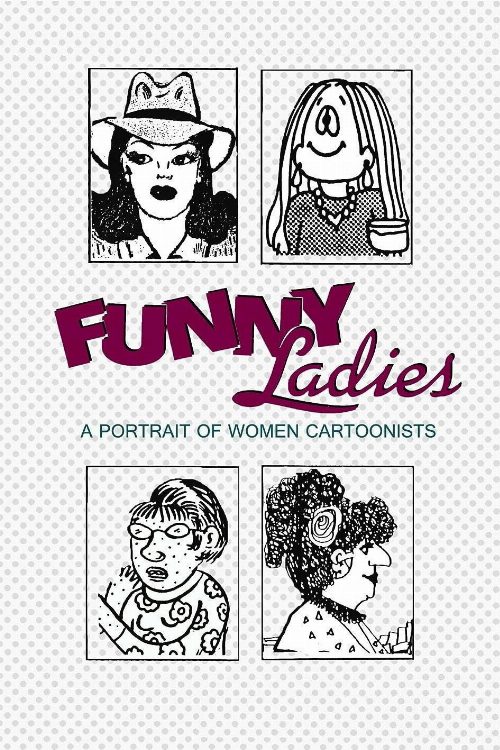
Funny Ladies: A Portrait of Women Cartoonists(1991)
About Funny Ladies: A Portrait of Women Cartoonists
Profiles on the creative processes of Dale Messick, Cathy Guisewite, Nicole Hollander, and Lynda Barry, preceded by a brief overview of early female comic strip artists.
The landscape of newspaper comics has long been dominated by masculine perspectives, yet the 1991 documentary Funny Ladies serves as a crucial historical corrective by centering the women who challenged that status quo. By turning the lens toward creators like Cathy Guisewite and Lynda Barry, the film captures a pivotal moment when female cartoonists were successfully embedding their own lived experiences into the daily funny pages. Rather than just offering a dry chronological survey, the project functions as an intimate look at the intersection of domesticity, professional perseverance, and the sharp wit required to navigate a male-dominated medium. It is an essential watch for anyone interested in the sociology of media or the history of visual storytelling, providing a rare glimpse into the workshops and minds of women who turned their observations about modern life into syndicated cultural staples.
Beyond the specific profiles of icons such as Dale Messick and Nicole Hollander, this documentary gains resonance by framing these creators as pioneers who used humor as a tool for subversion. The inclusion of Jean Stapleton adds a layer of theatrical gravity, bridging the gap between performance and the static art of the comic strip. For contemporary viewers, the film acts as a fascinating time capsule, documenting an era before the digital revolution fundamentally altered how we consume sequential art. It highlights the particular tension these women faced while balancing the demands of commercial syndication with the need to express authentic, often radical, truths about womanhood. Watching these artists at work reveals the meticulous process behind the seemingly effortless gags that once defined breakfast table culture.
The documentary is particularly suited for fans of feminist media studies and those who appreciate the evolution of the American comic strip. It manages to elevate the medium from mere escapism to a platform for complex social commentary. While the film is rooted in a specific late twentieth-century context, its themes regarding the struggle for creative recognition remain strikingly relevant for modern audiences. The narrative approach taken by the filmmakers ensures that the viewer understands not just the technical skill involved in ink and paper creation, but the sheer force of personality required to carve out a permanent space in a crowded market. Whether you are a dedicated enthusiast of the history of illustration or someone simply curious about the unsung architects of popular humor, this work offers a compelling and vital investigation into the female voice in the world of cartoons.