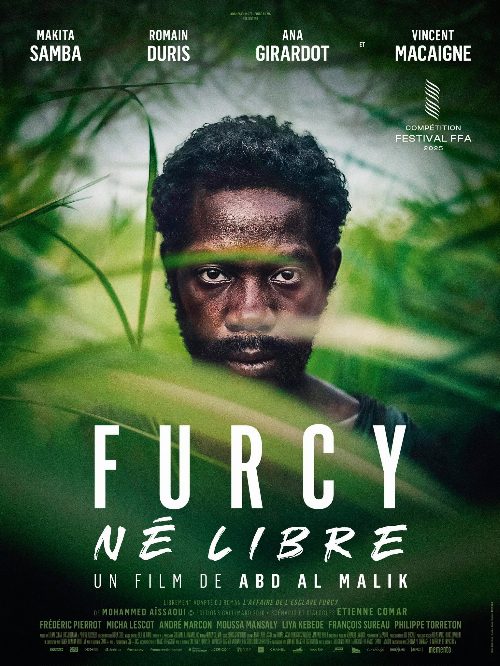
About Furcy, né libre
The true story of Furcy, a slave in a French colony who was able to achieve legal emancipation prior to the definitive abolition of slavery.
The legal odyssey of Furcy stands as a profound testament to human resilience, emerging from the colonial archives to challenge the brutal architecture of nineteenth-century French rule. Directed by the visionary artist Abd Al Malik, the film Furcy ne libre breathes life into a historical figure who dared to demand his humanity within a system designed to strip it away. While much of the global cinematic conversation often pivots toward the high-octane commercial landscapes of Indian industries like Telugu or Tamil cinema, this French production offers a quieter, yet equally visceral, exploration of justice. It functions as a meticulous character study that traces the internal and external battles of a man navigating a labyrinthine justice system long before the formal end of institutionalized bondage.
Romain Duris takes on the central role with a gravity that anchors the film, portraying the protagonist not merely as a victim, but as a strategic architect of his own liberation. The narrative avoids the pitfalls of melodramatic revisionism, opting instead for a grounded approach that examines the bureaucratic coldness of colonial courts. Alongside a stellar supporting cast including Vincent Macaigne and Makita Samba, the production creates an immersive period atmosphere that feels authentic to the specific geopolitical tensions of the era. For viewers who appreciate historical dramas that prioritize intellect and moral courage over spectacle, this project serves as a compelling bridge between past injustices and contemporary discourse on civil rights.
This film is positioned to resonate with audiences who favor the nuanced political storytelling often found in acclaimed Indian independent features, where the personal is inevitably linked to the societal. Abd Al Malik brings his distinct aesthetic sensibility to the project, infusing the historical setting with a sense of urgency that makes the legal maneuvering feel like a high-stakes thriller. By focusing on the singular determination of one man, the director invites us to consider how individual agency can fracture even the most oppressive structures. Those who track the evolution of global historical cinema will find this a vital addition to the canon, as it highlights a forgotten chapter of emancipation that predates traditional narratives. It is a thoughtful, sobering, and ultimately empowering piece of storytelling that demands patience and rewards it with a deep sense of historical clarity.