
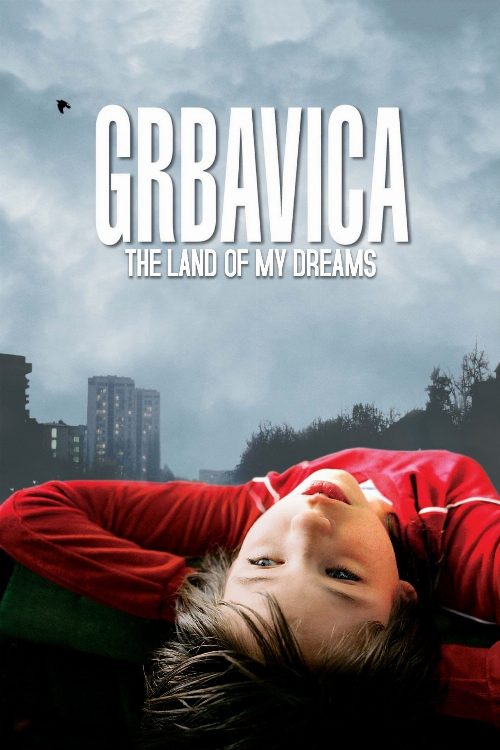
About Grbavica: The Land of My Dreams
A woman and her daughter struggle to make their way through the aftermath of the Balkan war.
In the annals of post-conflict cinema, a particularly poignant narrative emerges from the former Yugoslavia with Grbavica: The Land of My Dreams, a Bosnian drama that delves deep into the emotional scars left by war, focusing on a mother and daughter's quiet battle for normalcy. Directed by Jasmila Žbanić, this 2006 film isn't about grand battles or political machinations, but rather the intimate, often invisible, struggles of those who survived, particularly women. It's a powerful exploration of how past trauma bleeds into the present, shaping identities and relationships in ways that are both subtle and profound, set against the backdrop of a society grappling with its own fractured memory.
The film distinguishes itself by centering on a single mother, Esma, and her twelve-year-old daughter, Sara, in Sarajevo, years after the Bosnian War. Sara believes her father was a war hero, a narrative carefully constructed to shield her from a much darker truth. This protective lie, however, becomes an increasingly heavy burden as Sara yearns to attend a school trip that offers a discount for children of war martyrs, forcing Esma to confront the very past she's tried to bury. Grbavica, the title referencing a Sarajevo neighborhood heavily impacted by the war, thus becomes a microcosm of a nation attempting to heal while still living with unaddressed wounds. This narrative approach makes the film particularly resonant for viewers interested in the human cost of conflict, moving beyond statistics to the personal stories of resilience and the quiet dignity of survival.
For audiences accustomed to the often more outwardly dramatic narratives of war films, Grbavica offers a refreshing, introspective alternative. It will appeal to those who appreciate character-driven dramas and films that explore complex psychological landscapes, akin to other international features that have examined the aftermath of conflict through a domestic lens. Jasmila Žbanić, known for her commitment to portraying authentic female experiences and historical nuances, crafts a film that is both deeply moving and intellectually stimulating. Her directorial vision ensures that Grbavica is not just a historical account, but a timeless story about love, memory, and the enduring strength of the human spirit in the face of unspeakable hardship, making it a vital piece of European cinema.
Cast(16)