About I Don't Understand You Anymore
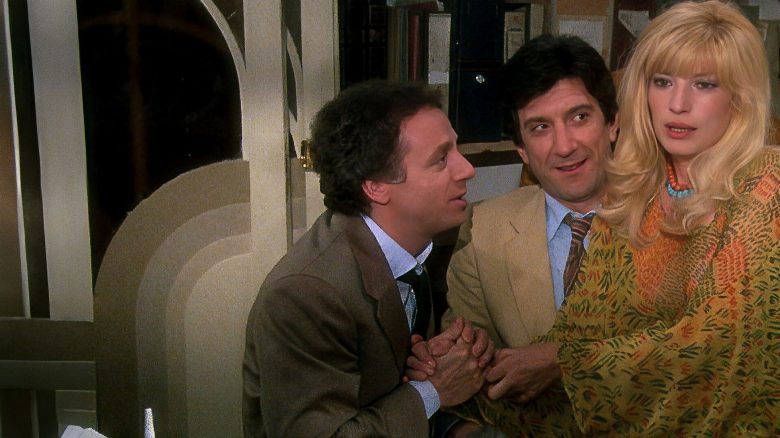
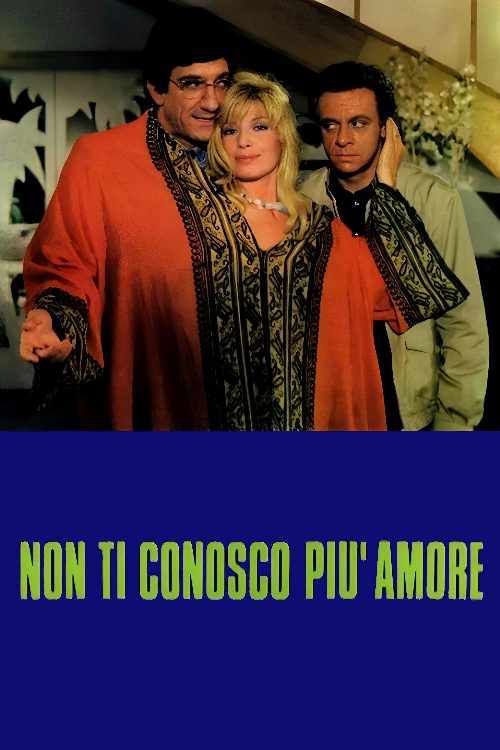
On entering her bathroom, Luisa finds a naked man showering. She calls the police at once and the man is arrested. At the police station Alberto, a psychiatrist, recognizes the man: he is Paolo, Luisa's husband. Alberto offers to help Paolo, but when the two men arrive at his home, Paolo still in his bathrobe, Luisa hugs Alberto and calls him Paolo. The two men try everything they think of to help Luisa regain her memory until the last (but not too unexpected) surprise.
Italian comedy has long mastered the art of turning domestic absurdity into a high-stakes psychological puzzle, and the 1980 film I Don't Understand You Anymore remains a quintessential example of this tonal dexterity. At the center of this frantic narrative is the legendary Monica Vitti, whose ability to navigate the thin line between neurotic comedy and genuine emotional displacement is on full display. The premise kicks off with a jarring intrusion when a woman discovers an uninvited man in her private quarters, triggering a series of events that rapidly spiral into a farce of mistaken identities. By placing the narrative in the hands of a psychiatrist who finds himself entangled in the very madness he is meant to diagnose, the film pokes fun at the clinical detachment often seen in mid-century European cinema.
For audiences who enjoy the rapid-fire wit of classic Italian farce, the film provides a fascinating look at how identity is perceived within the sanctity of a marriage. It stands as a notable entry in the filmography of the era, reflecting a period where filmmakers were increasingly experimental with the boundaries of reality and perception. While contemporary audiences might be accustomed to the more structured psychological thrillers coming out of global industries today, there is a distinct charm in how this feature leans into the theatricality of its premise. The interplay between the confused protagonist and the men attempting to navigate her fractured memory offers a masterclass in comic timing, particularly given the chemistry between the primary cast members.
This production is a perfect match for viewers who appreciate character-driven humor that does not rely on heavy-handed exposition. It functions as a time capsule of 1980s European filmmaking, where the focus remained squarely on the performative brilliance of lead actors rather than visual spectacle. By avoiding the typical tropes of a standard romantic comedy, the film forces the audience to question the reliability of the domestic sphere itself. Whether one is a seasoned scholar of world cinema or simply a fan of performances that demand total commitment to the bit, this work serves as an engaging reminder of why the Italian comedy tradition holds such a unique place in the global pantheon. It is a lighthearted yet structurally clever examination of how easily the familiar can become entirely alien when the mind decides to rewrite the rules of intimacy.