About I Want Your Money
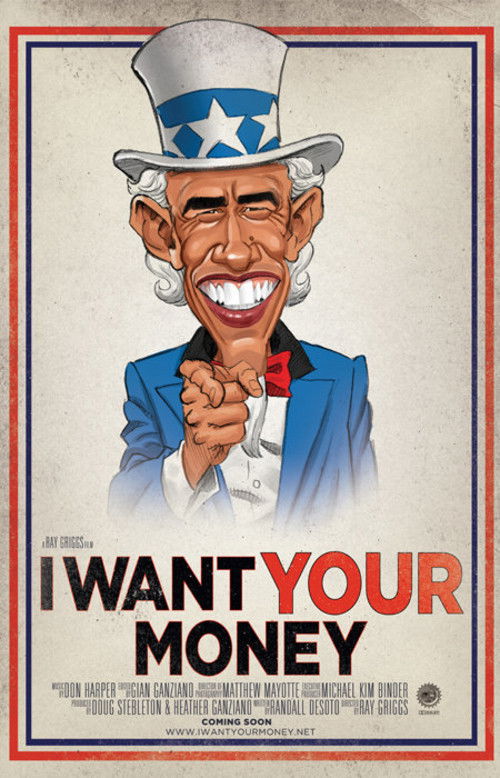
Two versions of the American dream now stand in sharp contrast. One views the money you earned as yours and best allocated by you; the other believes that an elite in Washington knows best how to allocate your wealth. One champions the traditional American dream, which has played out millions of times through generations of Americans, of improving one's lot in life and even daring to dream and build big. The other holds that there is no end to the "good" the government can do by taking and spending other peoples' money in an ever-burgeoning list of programs. The documentary film I Want Your Money exposes the high cost in lost freedom and in lost opportunity to support a Leviathan-like bureaucratic state.
Diverging paths for the American economic future serve as the central tension in the documentary I Want Your Money, a project that functions more as a polemic than a neutral observation of governance. Director Ray Griggs constructs a narrative that pits the philosophy of individual financial autonomy against the expansion of federal oversight, utilizing a collection of archival footage and political commentary to delineate these opposing ideologies. By contrasting the traditional ethos of personal hard work and self-reliance with the escalating scale of government-funded initiatives, the film invites viewers to interrogate the relationship between the taxpayer and the state. It deliberately steps away from the typical documentary format of academic inquiry, opting instead for a forceful critique of how wealth distribution is handled at the highest levels of the United States government.
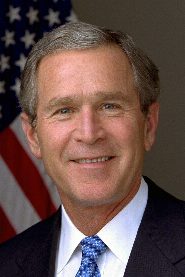
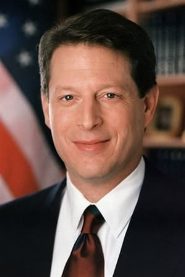
This film arrives at a time when audiences are increasingly accustomed to cinematic content that mirrors their own political convictions, and it serves as a distinct example of advocacy filmmaking. For viewers who follow the evolution of ideological debates, the documentary offers a specific window into the rhetoric that dominated American political discourse during the early twenty-first century. It is not designed for those seeking a balanced, multi-perspective journalistic report, but rather for an audience interested in understanding a particular brand of fiscal conservatism and the anxieties surrounding the growth of bureaucratic institutions. The inclusion of various prominent political figures allows the film to anchor its arguments in real-world policy decisions, making the abstract concepts of taxation and spending feel tangible for the spectator.
While the Indian film industry often navigates social and political themes through the lens of heightened drama or epic storytelling, I Want Your Money takes a different approach by leaning into the directness of the essay film format. It is a work that demands the audience arrive with their own set of questions, as the editing and framing are clearly intended to provoke a reaction rather than facilitate a dialogue. Those who appreciate fast-paced, argument-driven documentaries that aim to dismantle the status quo will find this piece to be a pointed study in American political polarization. By stripping away the nuance usually found in mainstream biographical works, Griggs ensures that the film remains a sharp, singular look at how conflicting visions of liberty can shape the financial trajectory of a nation. It remains a notable artifact for anyone examining how political messaging is crafted to resonate with the frustrations of the common citizen.
Cast(13)