About Kapodistrias
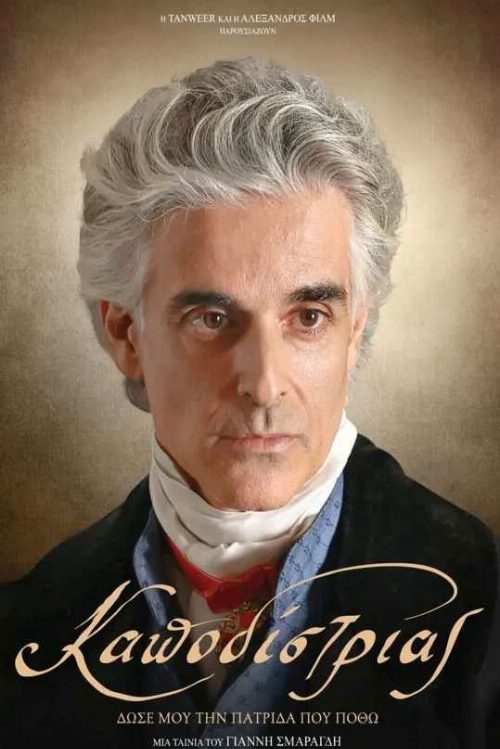
The story of the greatest Greek statesman. In the early 19th century, Greece has just gained its independence from the Ottomans and Ioannis Kapodistrias is called upon to assume the role of its first governor. He steadfastly defends the freedom of every human being with courage, kindness, and dignity and many personal sacrifices. He does not hesitate to confront the forces of evil, giving up wealth, glory, and international recognition, serving his homeland with faith and devotion.
Stepping away from the recent wave of spectacle-driven historical epics, Kapodistrias offers a grounded, character-centric exploration of the heavy burden of nation-building. Set against the fragile dawn of Greek independence in the nineteenth century, the film focuses on the monumental task faced by Ioannis Kapodistrias as he transitions from a refined diplomat into the first governor of a war-torn territory. While audiences familiar with the grand political maneuvers found in contemporary Indian historical dramas will recognize the familiar tension between personal integrity and systemic corruption, this film distinguishes itself through a quieter, more intimate examination of sacrifice. It is less concerned with battlefield glory and more invested in the psychological toll of leading a country struggling to define its own identity after centuries of external occupation.
The production carries the weight of a prestige project, anchored by Tasos Palatzidis in a performance that demands a nuanced understanding of statecraft and personal isolation. For viewers who appreciate the slow-burn intensity of biographical dramas that prioritize dialogue and moral dilemmas over pyrotechnics, this film serves as a compelling study of a leader who effectively traded an illustrious international career for the volatility of domestic governance. The inclusion of an international cast like Finbar Lynch alongside established Greek talent like Antonis Miriagos and Tasos Halkias suggests a narrative scope that reaches beyond local borders, aiming to contextualize the struggle for sovereignty within a broader European framework. This approach mirrors the current trend in global cinema where regional histories are being translated into universal tales of duty and ethical endurance.
This film is positioned for those who find intellectual stimulation in the friction between idealism and pragmatism. It avoids the trap of hagiography by leaning into the inherent tragedy of a man whose vision for a reformed society often placed him in direct opposition to entrenched local interests. By focusing on the personal costs of his unwavering commitment to human dignity, the director crafts a portrait that feels relevant to modern audiences who are increasingly skeptical of political figures. Whether you are a fan of historical period pieces or simply enjoy character studies that dissect the mechanics of leadership under fire, this project stands out as a serious, contemplative entry into the 2025 slate. It serves as a stark reminder that the process of birth for any democracy is rarely a clean or celebrated affair, but rather a grueling journey marked by compromise and, inevitably, great loss.
Cast(18)