
Les Biches(1968)
About Les Biches
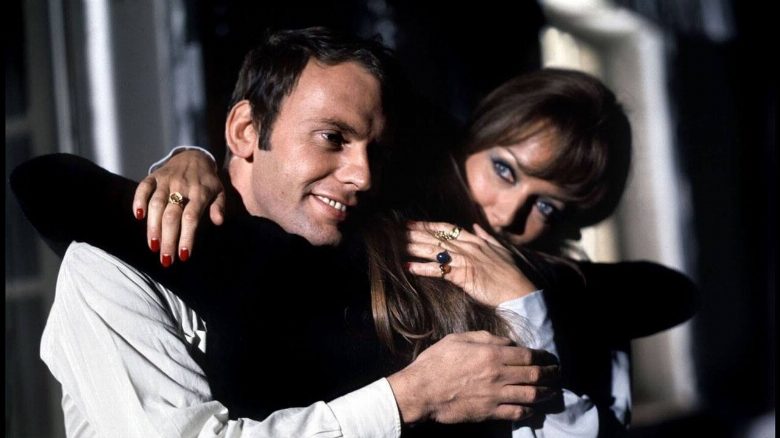
A bored bisexual millionaire picks up a young destitute street artist and whisks her away to her villa in Saint Tropez. They meet a dashing local architect and both fall for him, setting in motion a ménage à trois of deception and betrayal.
Claude Chabrol remains one of the most enigmatic architects of the French New Wave, and his 1968 masterpiece Les Biches stands as a chilling exploration of psychological manipulation and social artifice. Unlike the more overtly political works of his contemporaries, this film operates as a surgical examination of the bourgeoisie, where the glittering surface of Saint Tropez masks a rot of vanity and obsession. The story follows a wealthy, self-indulgent socialite who encounters a struggling pavement chalk artist in Paris, leading to a sudden invitation to the coast that fundamentally alters both of their lives. When a mysterious architect enters their orbit, the dynamic shifts from a mentorship into a volatile power struggle that is as seductive as it is destructive.
The film resonates deeply with modern audiences who are familiar with the complex power imbalances often depicted in contemporary world cinema, including the intense character-driven dramas currently emerging from the Indian film industries. In much the same way that Malayalam or Tamil cinema often uses domestic settings to dissect class friction and repressed desire, Les Biches transforms a sun-drenched villa into a claustrophobic stage for manipulation. The brilliance of the film lies in its restraint; it does not rely on histrionics to convey the toxicity of the central trio. Instead, it captures the subtle shifts in gaze and the deliberate withholding of affection that slowly dismantle the characters' composure. It is a quintessential study of how identity can be weaponized in the pursuit of love and social standing.
Viewers who appreciate slow-burn narratives where the atmosphere is as heavy as the dialogue will find much to admire in this work. Stéphane Audran delivers a career-defining performance, embodying the cold elegance of an aristocrat whose emotional stability is tied entirely to her ability to possess others. The film is perfectly suited for those who enjoy psychological thrillers that prioritize mood over traditional plot beats. By stripping away the typical romantic tropes of the late sixties, the director forces the audience to confront the darker side of human attachment. It remains an essential watch for anyone interested in the evolution of European art-house cinema and its enduring influence on how we portray the fragile boundaries between obsession and intimacy in the modern age.