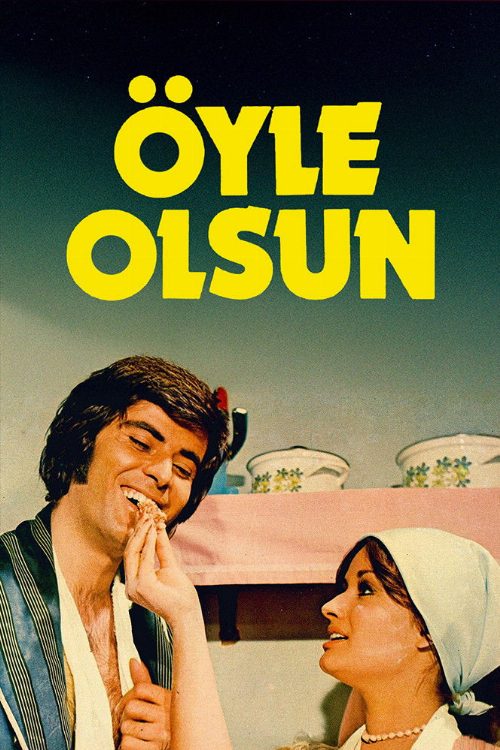
About Let It Be
Ferit who works as a reporter on a newspaper, makes fake news about the olive oil king Hulusi. One day he writes that he adds machine oils to his oils, another day he writes that his daughter Alev hangs up with men and prints her photos. Actually the married man seen in the photos is Alev's cousin.
The landscape of Turkish cinema during the mid-seventies was frequently defined by stories that balanced sharp social observation with the lighthearted tropes of domestic comedy. Orhan Aksoy, a director known for his ability to capture the zeitgeist of the era, helmed Let It Be as a quintessential example of this period. The narrative follows a journalist who finds himself entangled in a web of his own fabrication, specifically targeting a prominent business figure through a series of sensationalized and entirely false reports. By choosing to harass a wealthy industrialist and his family through the power of the press, the protagonist sets off a chain reaction of misunderstandings that serves as both a plot device and a critique of the media’s influence on private lives.
What elevates this film beyond a typical farce is its exploration of reputation and the fragility of public perception in a rapidly modernizing society. The conflict arises when a series of fabricated claims about contaminated products and questionable personal associations turns the life of the target into a chaotic spectacle. The inclusion of figures like Aysel Gurel adds a layer of authenticity to the production, reflecting the strong ensemble culture that was a hallmark of Turkish dramas during this decade. For viewers who appreciate the nostalgic aesthetic of 1970s international cinema, the film offers a look at how regional industries were experimenting with character-driven plots that prioritized dialogue and situational humor over high-budget spectacles.
This production is best suited for those interested in the evolution of Turkish filmmaking and the specific brand of melodrama that thrived in the pre-digital era. It captures a moment where the newspaper industry acted as a central pillar of social discourse, making the protagonist’s ethical lapses feel particularly pointed. By focusing on the interplay between the press and the elite, Aksoy crafted a narrative that feels both localized and universally relatable in its depiction of how truth can be bent for the sake of a headline. It stands as a testament to a time when filmmakers could weave complex personal vendettas into engaging stories that resonated with local audiences while maintaining a distinct visual identity that remains recognizable to enthusiasts of vintage world cinema today.
Cast(18)









Crew
Director
Similar Films