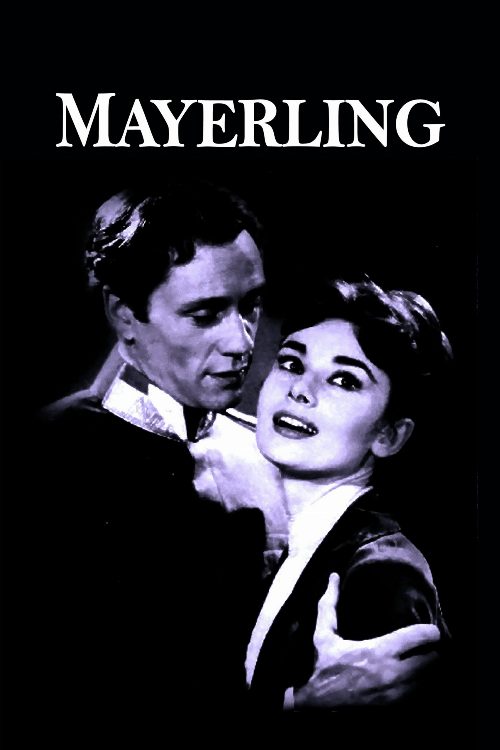
About Mayerling
Mayerling is the name of a notorious Austrian village linked to a romantic tragedy. At a royal hunting lodge there, in 1889, Crown Prince Rudolf--desperate over his father's command to put away his teenage mistress, the Baroness Marie Vetsera--shot her to death and killed himself. The misfortune may indeed have been a murder-suicide, but perhaps it was a political assassination, or even the result of a lunatic family vendetta: scholarship is still catching up with the facts.
Anatole Litvak brings a haunting elegance to the screen in this 1957 television production, capturing the suffocating weight of imperial expectations against the backdrop of a doomed affair. While many viewers today associate the tragedy of the Habsburg dynasty with historical textbooks, this adaptation breathes life into the tension between personal desire and the rigid protocols of late nineteenth century royalty. By centering the narrative on the emotional volatility of Crown Prince Rudolf, the film transcends the dry facts of the Mayerling incident, transforming a geopolitical footnote into a meditation on the cost of forbidden love. It is a striking example of the mid century fascination with European historical melodrama, offering a glimpse into a world where status functioned as both a golden cage and a death sentence.
The production serves as a masterclass in atmospheric storytelling, particularly for audiences who appreciate the understated intensity that Audrey Hepburn brings to her roles. Her presence grounds the film, providing a sense of vulnerability that contrasts sharply with the cold, calculating environment of the Austrian court. For fans of classic cinema, the film acts as a bridge between the theatrical sensibilities of the era and the burgeoning medium of television drama. It does not merely recount the events leading up to the infamous lodge discovery; rather, it explores the psychological erosion of a man pushed to the brink by familial duty and political isolation. This approach invites the viewer to look past the sensationalism of the event and consider the isolation inherent in absolute power.
Those who enjoy period pieces that emphasize character dynamics over sweeping battle sequences will find much to admire here. The film is positioned as a sophisticated look at the intersection of private heartbreak and public spectacle, which remains a timeless theme in global storytelling. Whether you are an enthusiast of vintage Hollywood or a student of how historical legends are curated for the screen, the project provides a compelling look at a mystery that continues to perplex historians. Litvak manages to maintain a sense of impending doom without sacrificing the grace of his leads, ensuring that the final act feels like a tragic inevitability rather than a shock. It remains a essential watch for anyone interested in the enduring power of historical mythmaking and the ways in which tragic romance continues to shape our cultural consciousness.
Cast(23)