About My Own Last Supper
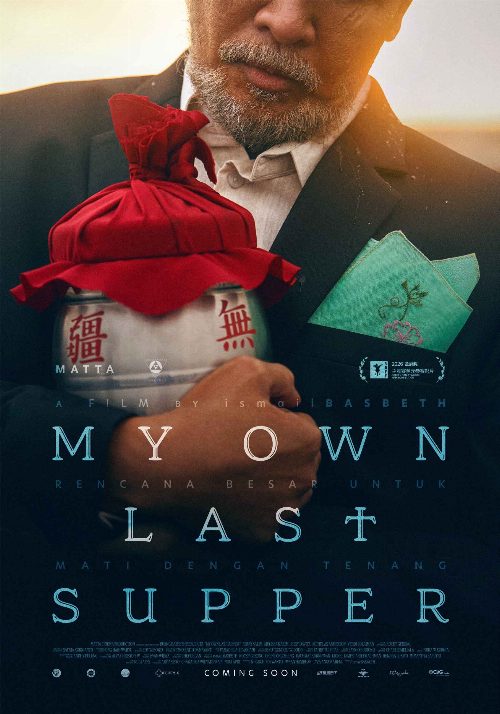
76-year-old widower Encek convenes his children for a final dinner, unveiling concealed memoirs of love, loss and generational wounds before choosing the sea as his reunion place with his deceased wife.
The weight of unspoken legacies sits at the heart of My Own Last Supper, a poignant Indonesian drama that explores the fragile architecture of family bonds when faced with the finality of existence. Director Ismail Basbeth crafts a meditative experience that feels both deeply intimate and culturally resonant, moving away from traditional melodrama to focus on the quiet, often painful, process of reconciliation. By centering the narrative on a septuagenarian patriarch who gathers his descendants for a concluding meal, the film taps into a universal anxiety regarding how we settle our internal accounts before our time runs out. It is a bold stylistic choice to frame a historical and personal reckoning through such a confined, domestic setting, allowing the performances of Buyung Ispramadi and the rest of the ensemble to carry the emotional burden of decades of silence.
In the current landscape of global cinema, where high-octane spectacle often dominates the conversation, this film stands out as a deliberate exercise in restraint. It echoes the slow-burn storytelling found in some of the most respected works emerging from regional Asian industries, where cultural specificities regarding filial duty and ancestral connection provide a rich backdrop for character development. For viewers who appreciate the contemplative pacing of contemporary independent dramas or the thematic depth of films that prioritize dialogue over action, this production offers a space for reflection. It avoids the temptation of easy sentimentality, instead inviting the audience to consider the complicated realities of long-held secrets and the burden of passing down family history to the next generation.
Ismail Basbeth continues to build a filmography defined by his interest in the human condition, and this project appears to be his most introspective work to date. The inclusion of figures like Rocky Gerung alongside established actors like Verdi Solaiman adds an intriguing layer of intellectual gravitas to the casting, suggesting that the film aims to engage with philosophical questions as much as emotional ones. By focusing on a protagonist who seeks to reclaim his own narrative through the act of sharing his memoirs, the movie challenges its audience to think about the stories they will leave behind. It is positioned as an essential watch for those who find beauty in the melancholy of farewells and the messy, beautiful complexity of kinship. This is a story for anyone who has ever wondered how to bridge the gap between where we come from and where we eventually go.