About My Sassy Girl
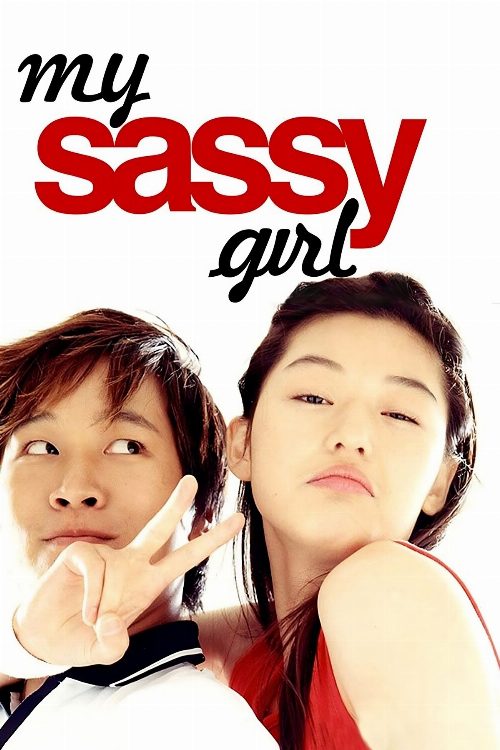
A dweeby, mild-mannered man comes to the aid of a drunk young woman on a subway platform. Little does he know how much trouble he’s in for.
Few cinematic offerings have managed to redefine the boundaries of the romantic comedy genre as effectively as the 2001 South Korean phenomenon My Sassy Girl. While international audiences are currently well-versed in the high-stakes emotional turbulence of K-dramas, this film remains a foundational pillar that helped catapult Korean storytelling onto the global stage. It pivots away from the traditional tropes of the era, replacing the demure damsel-in-distress archetype with a lead character who is volatile, unpredictable, and refreshingly complex. The narrative kicks off with a chance encounter on a public transit platform, setting into motion an unconventional courtship that subverts every expectation held by the unassuming male protagonist.
Within the broader landscape of Asian cinema, this production stands out for its bold tonal shifts, oscillating between slapstick humor and profound, melancholic introspection. For viewers accustomed to the vibrant, high-energy emotional swings often found in modern Telugu or Hindi blockbusters, this film offers a fascinating look at the roots of character-driven relationship dramas. It does not rely on grand spectacle or sprawling sets; instead, it centers entirely on the chemistry between the two leads and the evolving power dynamics of their chaotic union. The direction by Kwak Jae-yong demonstrates a keen understanding of how to balance absurdity with genuine heart, ensuring that the audience feels the weight of the characters' internal struggles beneath the layers of eccentric comedy.
Those who appreciate narratives that explore the resilience of the human spirit through the lens of a rocky romance will find much to admire here. It is an essential watch for anyone interested in the history of international cinema or the evolution of the romantic genre before it became heavily formulaic. By challenging the stereotypical gender roles of the early 2000s, the film carved out a space for future directors to experiment with protagonists who are allowed to be flawed, abrasive, and deeply lovable all at once. Whether you are a fan of contemporary Korean thrillers looking to understand the softer side of the industry or a cinephile tracing the lineage of modern romantic tropes, this classic provides a masterclass in how to craft an enduring, heartfelt story that refuses to play by the rules of the genre. Its legacy persists because it understands that true intimacy is often found in the most turbulent, confusing, and unexpectedly hilarious moments of life.
Cast(18)