
Rumble Fish(1983)
“Rusty James can't live up to his brother's reputation. His brother can't live it down.”
About Rumble Fish
Absent-minded street thug Rusty James struggles to live up to his legendary older brother's reputation, and longs for the days of gang warfare.
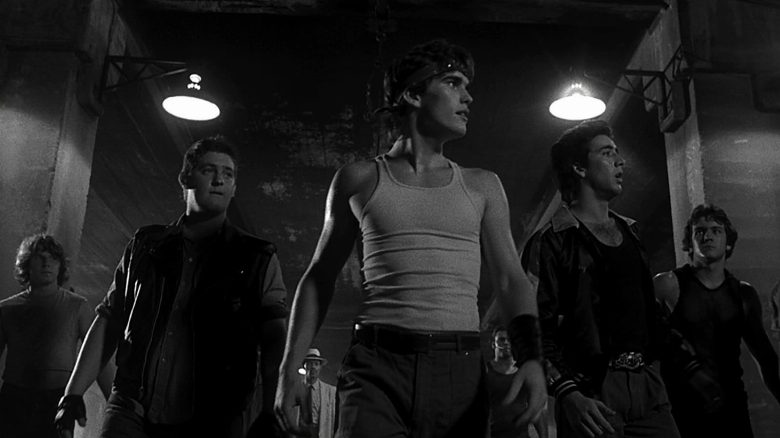
Francis Ford Coppola chose to film this stark monochromatic meditation on youth and disillusionment immediately after The Outsiders, creating a stylistic departure that feels as much like a fever dream as it does a character study. While the broader landscape of American cinema in the early eighties was shifting toward blockbuster spectacle and high-concept escapism, this project remained fiercely dedicated to the internal lives of its protagonists. By stripping away the vibrancy of color, the film forces the audience to confront the jagged edges of a world defined by stagnant street corners and the crushing weight of legacy. It serves as a haunting exploration of the hero worship that often consumes young men when they lack a clear direction, presenting a bleak but mesmerizing portrait of brothers trapped by the perceptions of those around them.
The narrative centers on a volatile teenager who idolizes a sibling who has long since abandoned the life of local street brawling. This dynamic offers a fascinating look at the disintegration of neighborhood myths, contrasting the younger brother’s desperate need for violence with the elder’s weary detachment from his own past. For fans of contemporary independent cinema who appreciate the gritty, character-driven storytelling found in modern regional Indian dramas—where the burdens of family heritage often dictate a protagonist’s trajectory—this film will strike a resonant chord. It mirrors the thematic depth seen in the works of directors who use small-town environments to mirror the grand, often tragic, psychological battles of their leads.
Viewers who enjoy atmospheric filmmaking and strong ensemble performances will find much to admire here, particularly in the early career turns of a cast that would go on to shape Hollywood for decades. It is not a standard crime film, but rather a somber reflection on the inevitability of change and the impossibility of retreating into the nostalgia of street gangs. Those seeking a high-octane thriller might find the pace deliberate, yet the film rewards a patient eye with its innovative cinematography and a sense of encroaching melancholy. It remains an essential watch for cinephiles who value formal experimentation and wish to see how a legendary filmmaker distilled the essence of a generation’s aimlessness into something both timeless and deeply personal. Its place in the pantheon of eighties drama is cemented by a refusal to offer easy answers, leaving the audience to grapple with the same existential questions that haunt its central characters until the final frame.
Cast(19)