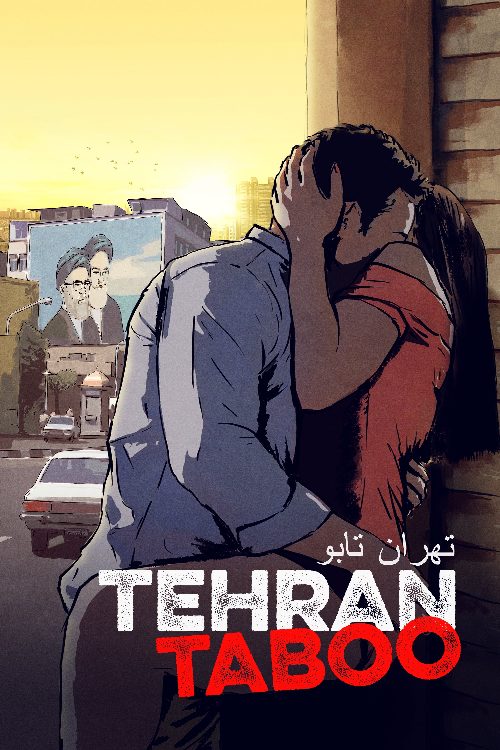
About Tehran Taboo
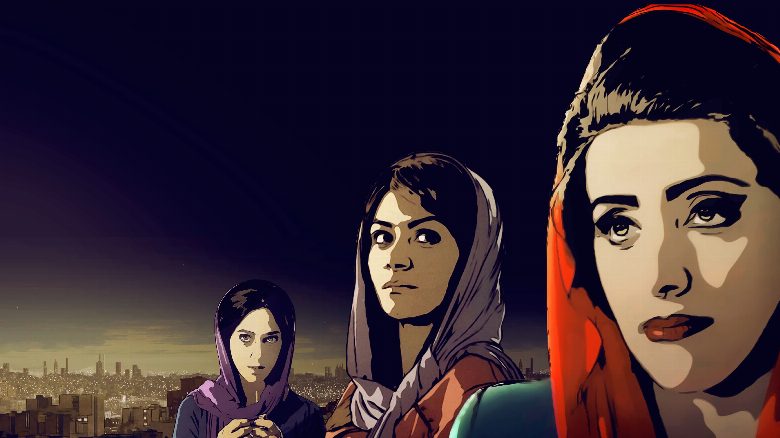
The lives of three strong-willed women and a young musician cross paths in Tehran’s schizophrenic society where sex, adultery, corruption, prostitution and drugs coexist with strict religious law. In this bustling modern metropolis, avoiding prohibition has become an everyday sport and breaking taboos can be a means of personal emancipation.
Tehran Taboo represents a striking departure from the traditional live-action narratives often associated with Middle Eastern cinema, utilizing the rotoscoping animation technique to peel back the layers of a complex, multifaceted capital city. While audiences accustomed to the vibrant song-and-dance spectacles of Indian cinema might find the visual aesthetic jarringly austere, the film shares a deep thematic kinship with the gritty, neo-realist dramas emerging from the Malayalam and Tamil industries. By blending the stark reality of Iranian social restrictions with the fluidity of drawn figures, director Ali Soozandeh crafts a world that feels both hyper-real and dreamlike. It is a bold stylistic choice that allows the narrative to navigate sensitive subject matter—such as the clandestine subcultures of a city defined by religious dogma—without the limitations of a physical camera lens, effectively turning the screen into a canvas for raw human vulnerability.
The story weaves together the fates of several disparate individuals, ranging from resilient women fighting for autonomy to a musician caught in the crosshairs of societal expectations. In the context of global cinema trends, this work stands as a poignant reminder of how personal freedom frequently clashes with systemic control. It is positioned as an essential watch for viewers who gravitate toward character-driven studies that prioritize emotional atmosphere over straightforward plot progression. Fans of auteurs like Anurag Kashyap or Lijo Jose Pellissery will likely appreciate the uncompromising gaze directed at the hypocrisy simmering beneath the surface of urban life. The film does not merely observe these characters; it forces the audience to reconcile with the duality of an existence where survival is often synonymous with defiance.
What makes this production particularly compelling is its refusal to simplify the cultural landscape it depicts. Instead of casting the city as a monolith of oppression, it highlights the ingenuity of those who live within its contradictions. It is an ideal recommendation for cinephiles who seek out international features that challenge the status quo, offering a sophisticated look at how private lives intersect with public morality. By documenting the tension between modern desires and ancient mandates, the film secures its place as a significant piece of contemporary world cinema. It captures a specific moment of social friction that resonates far beyond the borders of Iran, appealing to anyone invested in the universal quest for dignity within restrictive environments. The meticulous attention to detail ensures that every frame serves the broader narrative, making this a hauntingly beautiful exploration of the human condition.
Cast(15)