About The Arab
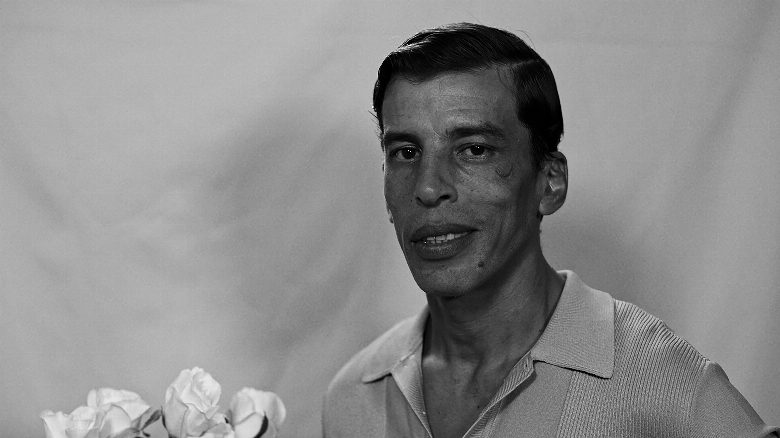
Haroun is an old bachelor who has lived in Oran for several years. A retired civil servant, he leads a reclusive life until the day he meets Kamel in a bar—a journalist to whom he tells an incredible story dating back to 1942. He claims to be the brother of ‘the Arab’ killed in a story told in one of the most famous novels of the 20th century, ‘The Stranger’ by Albert Camus. An Arab with an erased name: Moussa. Through anger, assertions, details, and confidences, Haroun finally convinces the journalist to listen to his story. His confession is a cry of freedom and distress—but above all, a cry of revolt: against an abusive mother, against a country that failed to achieve true independence, against a book, and against a famous French writer.
The weight of literary legacy often rests heavily on the shoulders of those it chooses to ignore, a concept that Malek Bensmail explores with haunting precision in The Arab. Set against the backdrop of Oran, the film centers on Haroun, a man who has spent his twilight years in quiet isolation until a chance encounter with a journalist forces him to confront a past long buried by history and ink. The narrative serves as a direct, provocative response to the nameless victim in Albert Camus’s seminal work, The Stranger, reimagining the silenced figure not as a mere plot device, but as a human being with a lineage and a voice. By grounding the story in the specific textures of Algerian life and the lingering scars of colonial discourse, the film positions itself as a vital piece of post-colonial cinema that challenges the canon from within.
Dali Benssalah delivers a performance that anchors the film’s emotional intensity, portraying a man who has spent decades simmering with a resentment that is as personal as it is political. The direction by Malek Bensmail avoids the traps of a standard period drama, opting instead for a gritty, contemporary interrogation of how literature shapes national identity and erases indigenous reality. It is a bold aesthetic choice to confront a globally recognized intellectual monument through the eyes of an aging, disillusioned civil servant. For audiences who appreciate cinema that functions as a historical reckoning, this film provides a necessary counter-narrative, shifting the focus from the existential malaise of a fictional character to the visceral, lived trauma of those marginalized by the colonial gaze.
The Arab is poised to resonate deeply with viewers who enjoy layered dramas that blend investigative curiosity with introspective character studies. It functions as both a detective story of sorts and a profound meditation on the power of storytelling to either liberate or suppress. While the film explicitly engages with the history of French literature, its themes of familial duty, national disillusionment, and the reclamation of truth are universal. This is not merely a film for those familiar with the source material but for anyone interested in the complex intersections of art, memory, and the human cost of being relegated to a footnote in someone else’s masterpiece. By giving a face and a name to the forgotten, the production asserts that history is never truly settled until the silenced have had their say.