About The Day She Returns
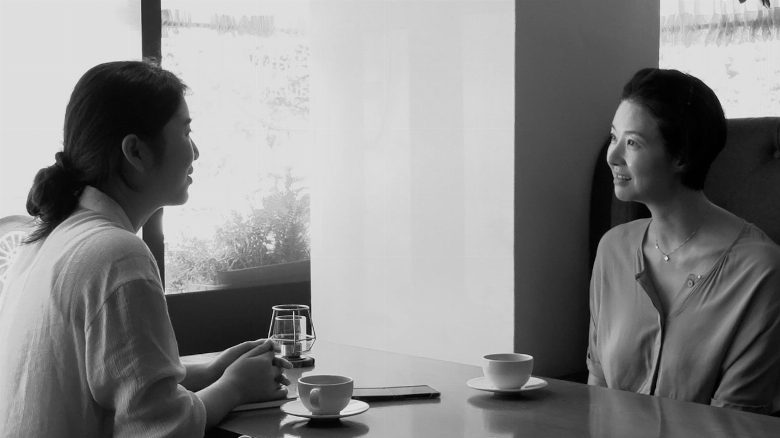
She has just finished the shoot of an independent film and now has to give three interviews about it. Afterwards, in her acting class, her teacher asks her to reenact the interviews. But for some reason, she is unable to remember them.
The quiet resonance of an ordinary day serves as the perfect canvas for Hong Sang-soo to explore the fragile architecture of human memory and artistic performance. In The Day She Returns, the director strips away the artifice of cinema to examine the mundane rhythms of a professional actress navigating the aftermath of a film shoot. By centering the narrative on a series of promotional interviews that blur into an elusive acting exercise, the film captures that peculiar psychological dissonance where the lines between one’s public persona and private identity begin to dissolve. It is a character study that feels startlingly intimate, eschewing grand dramatic arcs in favor of the subtle tremors found in repeated conversations and half-forgotten moments.
For followers of Korean independent cinema, this project arrives as a quintessential addition to a body of work defined by its minimalist aesthetic and preoccupation with the fluidity of truth. While much of contemporary global cinema, including the high-octane productions coming out of the Telugu and Hindi industries, prioritizes spectacle and intricate world-building, this film opts for a radical simplicity. It functions as a counterpoint to the maximalist trends dominating the box office, offering a meditative space for viewers who appreciate the nuances of dialogue-driven storytelling. The presence of Song Sun-mi brings a grounded, observational quality to the lead role, anchoring the abstract concept of memory loss within a performance that feels both spontaneous and deeply considered.
This cinematic outing is tailor-made for audiences who find beauty in the philosophical inquiries of masters like Eric Rohmer, yet it maintains a distinct cultural sensibility that remains uniquely tied to the Korean landscape. It invites the audience to become detectives of the everyday, parsing through the protagonist’s inability to recall her own words to discover what she might be hiding from herself. Those who gravitate toward films that challenge the traditional structure of storytelling will find much to admire in the way the director utilizes repetition to expose the inherent instability of our experiences. By transforming a simple classroom reenactment into a mirror for the soul, the film positions itself as a compelling look at the masks we wear and the stories we tell ourselves to maintain a sense of self. It is a thought-provoking invitation to consider whether the truth resides in the events we live or in the versions of those events we choose to retain.