About The Up-Standing Sitter
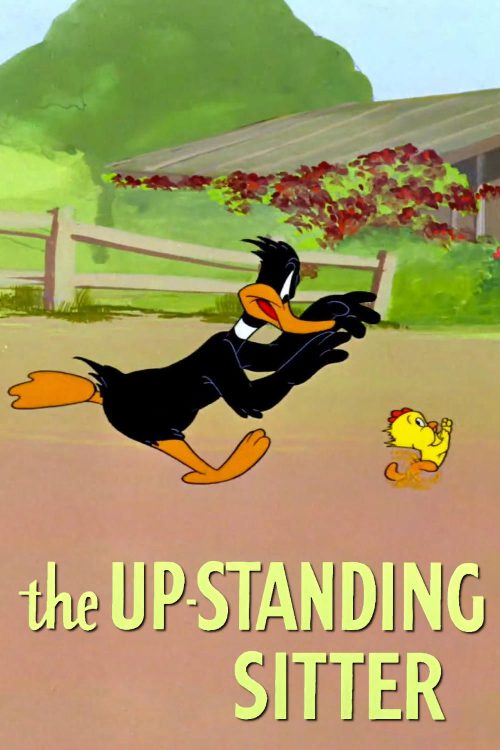
Daffy Duck is working as a babysitter for the Acme Baby Sitting Agency. While he's sitting on a chicken egg, it hatches. The chick decides Daffy is a stranger and he should have nothing to do with him, so flees. Daffy has to catch it.
In the landscape of golden age animation, the frantic energy of Robert McKimson remains a benchmark for character-driven comedy, and his 1948 short The Up-Standing Sitter serves as a masterclass in escalating absurdity. This film places the iconic Daffy Duck in a domestic predicament that feels remarkably modern in its premise, casting the usually self-serving waterfowl into the role of a reluctant guardian. By swapping his typical greedy schemes for the unexpected responsibility of childcare, the narrative highlights the comedic friction between Daffy’s ego and the unpredictable nature of a hatchling. It captures the essence of the Warner Bros. style, where visual inventiveness consistently trumps grounded logic, making it a perfect case study for those interested in the evolution of slapstick timing.
The film distinguishes itself by leaning into the chaotic energy that defined the post-war animation era, showcasing how seasoned animators could squeeze immense personality out of simple, high-stakes interactions. With the legendary Mel Blanc providing the vocal performance, the short relies on rapid-fire dialogue and expressive vocal tics to establish the power dynamic between the flustered sitter and the surprisingly independent chick. While modern audiences often associate animation with sprawling epics or complex emotional arcs, this piece thrives on the purity of the chase, prioritizing physical gags and rhythmic pacing over sentimentality. It is an essential watch for animation historians and fans of vintage comedy who appreciate how much tension can be derived from a single, poorly managed task.
For viewers who enjoy the sharper, more erratic version of Daffy Duck—the one who is constantly outwitted by his own hubris—this entry is a standout selection. It avoids the softer characterizations that would later define the studio’s output, instead leaning into the prickly, short-tempered persona that made the character a cultural touchstone. The Up-Standing Sitter is not merely a relic of a bygone era but a vibrant example of how short-form storytelling can sustain a frantic, hilarious momentum without ever needing to rely on excessive exposition. Those who appreciate the craftsmanship of mid-century American cartoons will find this work to be a quintessential example of the medium at its most polished, balancing technical precision with a relentless commitment to pure, unadulterated nonsense.