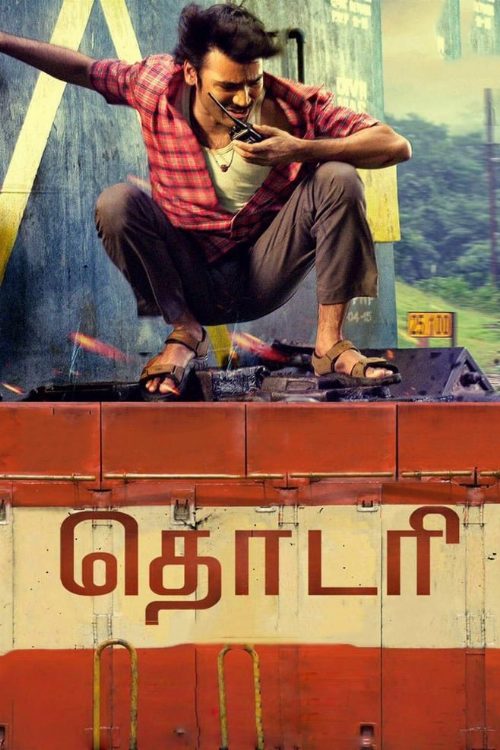
About Thodari
A pantry boy falls in love with the touch-up girl of an actress travelling on his train, but an incident turns the train into an unstoppable force posing a threat to the passengers, and the romance.
Modern Tamil cinema has long embraced the high stakes of the journey film, yet Thodari pushes this subgenre into a realm of chaotic spectacle that feels both ambitious and distinctly rooted in its cultural landscape. At its core, the narrative functions as a bridge between a gentle, grounded romantic comedy and a large-scale survival thriller. By anchoring the emotional weight on the blossoming connection between a humble catering attendant and a makeup artist traveling across the country, the film creates a sharp contrast against the logistical nightmare that unfolds once the locomotive loses its ability to halt. This juxtaposition allows for a unique exploration of how human intimacy can flourish even when surrounded by the mechanical panic of a runaway transit vessel.
Dhanush demonstrates his characteristic versatility here, shedding the persona of the hyper-masculine hero to inhabit a character defined by sincerity and vulnerability. His chemistry with Keerthy Suresh serves as the heartbeat of the production, grounding the frantic pacing of the second half. Under the guidance of director Prabhu Solomon, who is well-regarded for his ability to blend naturalistic settings with intense human drama, the film taps into the familiar anxieties of public transport while elevating them into a cinematic event. It is a work that belongs to a specific era of mid-2010s Tamil filmmaking where directors were increasingly eager to experiment with high-concept premises that demanded significant technical resources and visual effects.
Viewers who enjoy films that refuse to stay within the lines of a single genre will find plenty to appreciate here. It is designed for an audience that values the classic tropes of South Indian commercial entertainment—such as character-driven humor and emotional stakes—while also craving the adrenaline of a disaster movie. While the film navigates the complexities of class dynamics and the unpredictability of fate, it remains primarily a spectacle-driven experience. Those who appreciate the filmography of Prabhu Solomon, particularly his penchant for placing ordinary protagonists in extraordinary environmental perils, will find this a notable entry in his creative portfolio. It stands as a testament to the industry's ongoing fascination with human resilience, suggesting that even in the face of a technological catastrophe, the most compelling stories are still those about the people caught in the middle of the machinery.