
About Vivre Sa Vie
Twelve episodic tales in the life of a Parisian woman and her slow descent into prostitution.
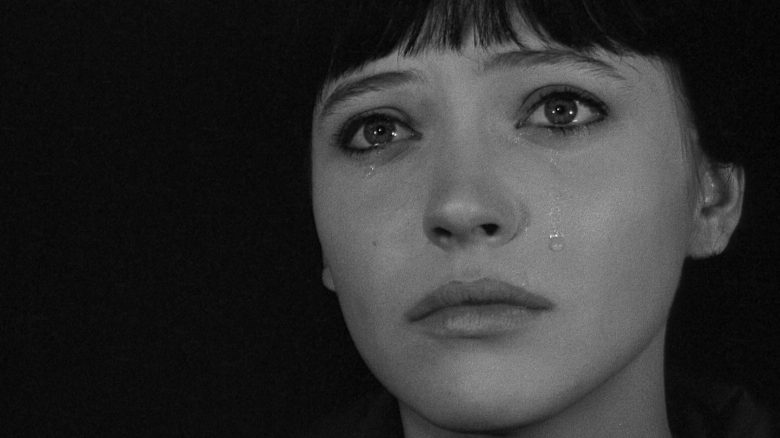
Jean Luc Godard forever altered the landscape of global storytelling with this 1962 masterpiece, a film that remains as structurally daring today as it was during the height of the French New Wave. By fracturing the narrative into twelve distinct chapters, the director forces the audience to confront the life of a Parisian woman not as a continuous flow of melodrama, but as a series of detached, philosophical snapshots. While contemporary Indian cinema often relies on sprawling emotional arcs and high-octane musical numbers to explore moral complexity, this film chooses the exact opposite path. It strips away the artifice of traditional drama to examine the cold, clinical reality of personal agency and the social machinery that eventually traps its protagonist. The stark black and white cinematography serves as a precursor to the minimalist aesthetic that has influenced countless auteurs across the globe, including modern experimental filmmakers within the Malayalam and independent Kannada industries who prioritize atmosphere over conventional plot beats.
For the modern viewer, the film acts as an intellectual exercise that demands patience and active participation. It is positioned as essential viewing for those who appreciate the intersection of existential philosophy and screen performance, particularly for fans of world cinema who enjoy seeing how directors challenge the boundaries of their medium. While the subject matter involves a descent into a world of exploitation, the focus never shifts toward sensationalism. Instead, it maintains a detached, almost journalistic distance that highlights the protagonist as a person rather than a plot device. This stylistic choice creates a haunting resonance that lingers long after the credits roll, making it a pivotal study for students of history and cinema enthusiasts alike.
This work stands as a cornerstone of the French New Wave, a movement that encouraged filmmakers to break the rules of classical continuity, much like the current wave of gritty, realistic storytelling emerging from the regional hubs of Hyderabad and Chennai. It remains a testament to the power of a singular vision, proving that a film does not need grand spectacle to leave an indelible mark on the viewer. Those who gravitate toward character-driven narratives that eschew easy answers will find this experience deeply rewarding. It is a stark reminder that even in the early sixties, directors were already pushing the limits of how we perceive truth on screen, a legacy that continues to inform the boldest voices in international film today.
Cast(22)