About Where's Mama's Boy?
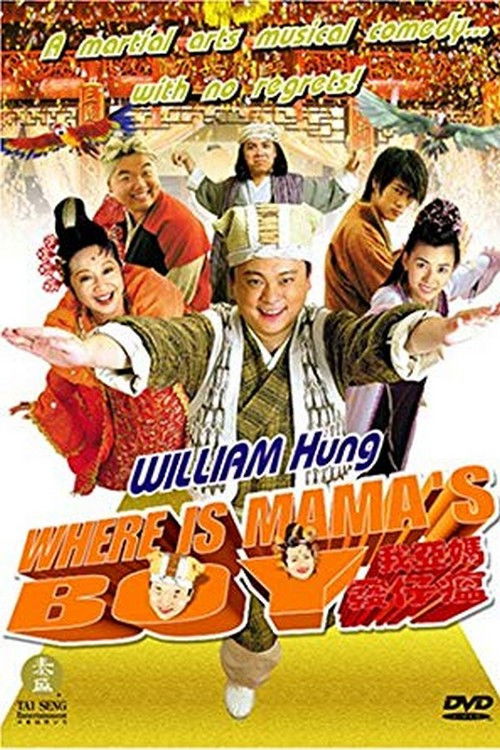
William Hung, who shot to fame with an off-key audition on "American Idol," makes his film debut in this martial arts musical comedy. Auntie Foon (Nancy Sit), a music hall owner in Imperial China, searches for her long-lost son, as well as husbands for her 12 daughters. Enter kindly singer Ma (Hung), who could be Foon's son. The fun family film also features a priceless Chinese version of Hung singing his signature, Ricky Martin's "She Bangs."
The cinematic landscape of the mid-2000s produced a fascinating array of experimental genre-blenders, but few occupy as peculiar a niche as Where Is Mama’s Boy. Arriving at a moment when global pop culture was beginning to embrace the viral sensations born from early reality television, the film serves as a quirky artifact of its time. By centering its narrative on the unexpected transition of an internet personality into a feature film protagonist, director Steve Cheng Wai-Man crafts a lighthearted romp that leans heavily into the absurdity of its premise. While audiences in the Indian film industries, particularly those accustomed to the high-energy musical dramas of Tollywood or the elaborate ensemble comedies of Bollywood, might recognize the structural beats of a family-focused farce, this project operates with a distinctly Hong Kong sensibility that prioritizes physical humor and rapid-fire gag delivery.
The story revolves around a matriarch who manages a bustling music hall, balancing the dual pressures of finding suitable matches for her dozen daughters while simultaneously tracking down her estranged child. When a soft-spoken singer enters the fold, the narrative kicks into gear, teasing the possibility of a long-awaited reunion. For viewers who enjoy nostalgic comedies that do not take themselves too seriously, the film offers a colorful, period-inspired backdrop that functions as a stage for lighthearted theatrics. It is a production designed for those who appreciate the blend of traditional martial arts tropes with the chaotic energy of a variety show. The inclusion of a tongue-in-cheek musical performance serves as the centerpiece, grounding the film in the specific brand of meta-humor that defined the era.
Beyond the central intrigue of its lead casting, the project benefits from the participation of veteran performers who bring a sense of seasoned stability to the madness. The interplay between the younger, inexperienced lead and the established character actors creates a dynamic that is both charming and intentionally awkward. This film is best suited for fans of international cult cinema who enjoy observing how global trends in fame and media consumption influenced regional storytelling styles two decades ago. While it may not aim for the emotional depth of contemporary prestige dramas, its commitment to pure entertainment and its willingness to lean into its own strange identity make it a noteworthy footnote in the history of cross-cultural media crossovers. It remains a vibrant, albeit unconventional, example of how a simple premise can be transformed into a theatrical spectacle through sheer personality and a flair for the unpredictable.