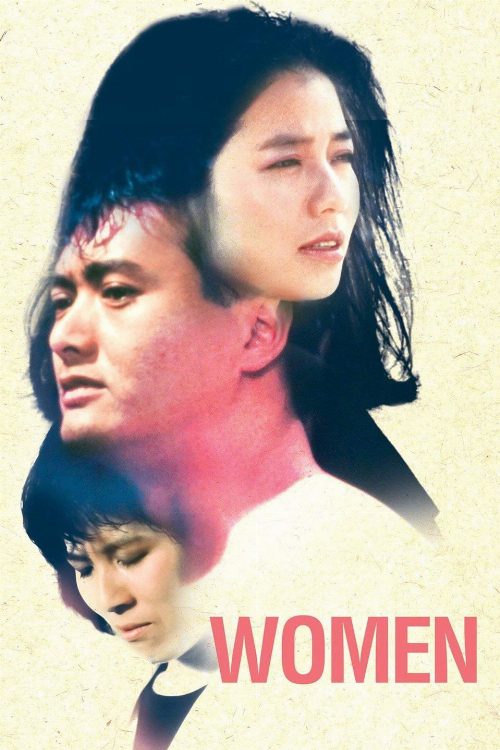
About Women
Liang Pao-erh joins the carefree Spinsters' Club when she discovers her husband is having an affair. Despite the seemingly happy front that her sisters put on, beneath it all, each of them secretly yearns for a man in her life.
Stanley Kwan Kam-Pang emerged as a singular voice in Hong Kong cinema during the mid-eighties, and his early directorial effort Women stands as a poignant bridge between the traditional melodrama of the past and the sophisticated, character-driven narratives that would eventually define the Hong Kong New Wave. Rather than relying on the bombastic action sequences that frequently dominated the regional box office at the time, this film turns its lens toward the quiet, internal landscapes of the urban experience. It centers on the domestic unraveling of Liang Pao-erh, whose realization of a marital betrayal forces her into a social circle of independent women who project an aura of self-sufficiency. The narrative is less concerned with the mechanics of the infidelity itself and more preoccupied with the performative nature of female solidarity in a rapidly modernizing society where the lines between independence and loneliness remain perpetually blurred.
The cultural resonance of this project lies in its unflinching look at the gender dynamics of the era, challenging the standard portrayals of women as mere satellites to their male counterparts. By exploring the collective anxieties of the Spinsters Club, the film paints a nuanced portrait of individuals attempting to navigate societal expectations while harboring deep-seated desires for companionship. It is a contemplative piece of work that will likely appeal to enthusiasts of international auteur cinema who appreciate a slow-burn narrative style. The film invites viewers to look past the polished exteriors of its protagonists, revealing the vulnerabilities that exist behind the mask of the modern, working woman. For those interested in the evolution of Stanley Kwan as a filmmaker, this entry serves as a crucial foundational text, showcasing his early mastery of atmospheric storytelling and his commitment to examining the complexities of the human condition without resorting to easy resolutions.
Positioned against the backdrop of a changing Hong Kong, the film remains an essential watch for students of world cinema who seek to understand how filmmakers began to dismantle patriarchal tropes during the late twentieth century. Maggie Lee delivers a performance that anchors the film in genuine emotion, capturing the precise moment when a predictable life shatters and the search for a new identity begins. By avoiding the typical pitfalls of a revenge drama, the film instead offers a sophisticated meditation on the nature of relationships and the resilience required to survive them. It is a timeless exploration of what it means to be a woman searching for meaning in a world that often demands conformity, making it a compelling discovery for contemporary audiences who value depth, artistic intent, and character-driven drama.
Cast(16)