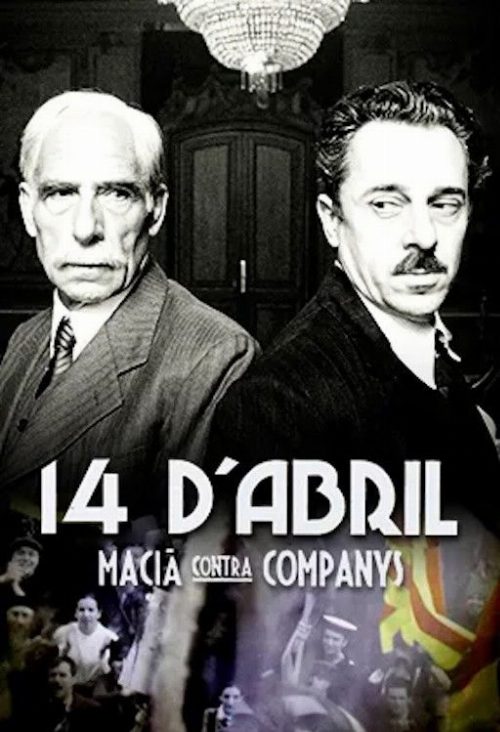
14 d'abril. Macià contra Companys(2011)
About 14 d'abril. Macià contra Companys
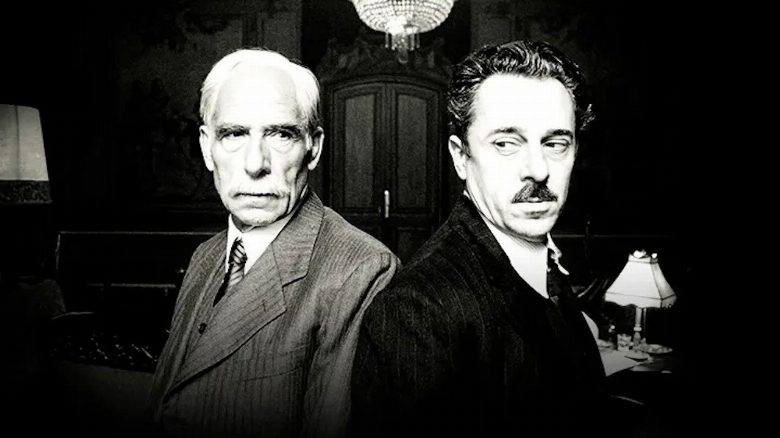
"14 d'abril. Macià contra Companys "is a television drama, allegedly recorded in 1932, but with the methods, style and own means 2010. With this temporary license, the stars of one of the episodes of the Catalan capital twentieth century discussed the facts, in first person, while a nosy camera helps us to relive what happened in Barcelona between 14 and 17 April 1931, the three-day duration of the Catalan Republic. All with the aim of showing the greatness and the precariousness of a gesture, half improvised by Companys key sovereigntist corrected by Macià, and that led to a shouting match.
Stepping away from traditional historical reenactments, Manuel Huerga delivers a stylistic experiment that challenges how we consume political chronicles on screen. By framing the events of April 1931 as if they were captured by a contemporary news crew suddenly transported to the past, the film creates a unique bridge between archival gravity and modern documentary aesthetics. This approach is particularly refreshing for those accustomed to the polished, often sterile period pieces that dominate European television dramas. Rather than presenting a dry lecture, the production opts for a kinetic, handheld energy that mirrors the frantic atmosphere of a nation caught in a sudden, high-stakes power shift.
The narrative focuses on the friction between two iconic figures, Francesc Macia and Lluis Companys, during the volatile three-day birth of the Catalan Republic. For viewers who follow the evolution of regional cinema, this film serves as a compelling case study in how to handle local political heritage without descending into hagiography. Much like recent trends in Indian cinema where filmmakers are increasingly revisiting pivotal historical moments with a gritty, realistic lens, Huerga prioritizes the human flaws and strategic disagreements of his protagonists over monument-building. The tension between the two leaders acts as the heartbeat of the story, transforming what could have been a static history lesson into a character-driven confrontation about ideology and pragmatism.
This project is essential viewing for history buffs and fans of political thrillers who appreciate complex dialogue over grand action sequences. By stripping away the distance of time, the director forces the audience to confront the improvisation and uncertainty that defined these historical hours. It is a bold stylistic choice that makes the characters feel accessible and contemporary, despite the period setting. Whether or not one is familiar with the specific intricacies of the 1930s political landscape, the film excels as a study of leadership under pressure. It is a sophisticated piece of work that demands active engagement, asking the viewer to weigh the risks of idealism against the stark reality of political survival. Ultimately, the film stands as a testament to the idea that the most compelling stories are often found in the messy, unscripted moments that precede a revolution.