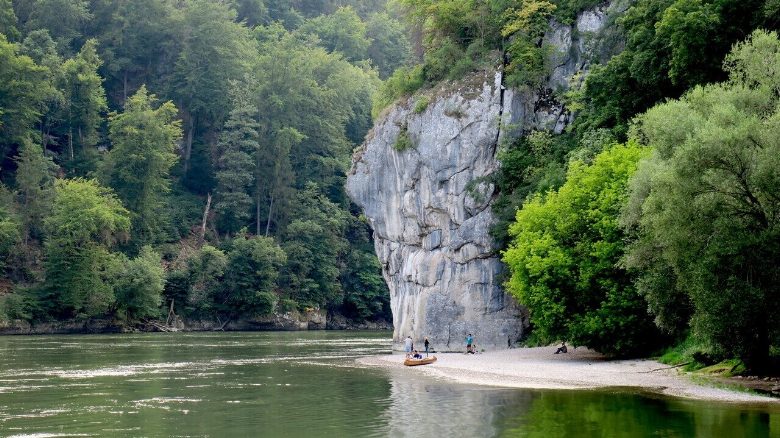

About Strange River
One summer, Dídac travels by bike along the Danube with his family, starting where the river first emerges in Germany. As they journey downstream, he begins seeing a mysterious boy, Alexander, who appears and disappears in the water. Dídac feels himself changing, drawn toward Alexander and away from his brother Biel. Their mother, Monika, who once took the same trip as a teenager, drifts into memories of a past summer love. When she sees Dídac and Alexander together, she encourages them to continue the journey alone. But as twilight falls, Dídac begins to question who Alexander truly is.
The shimmering waters of the Danube serve as far more than a scenic backdrop in Strange River, a film that masterfully blurs the boundary between a traditional coming of age odyssey and a haunting psychological reverie. Directed by Jaume Claret Muxart, the narrative follows a young protagonist named Didac during a family cycling expedition that traverses the heart of Europe. While the premise hints at the typical tensions of a summer holiday, the film quickly pivots into a surreal exploration of identity and detachment. By weaving together the protagonist's burgeoning obsession with a phantom-like companion named Alexander and his mother Monika's own reflective nostalgia, the movie transforms a standard travelogue into a meditative study on how the ghosts of our past influence the paths we choose to follow.
For enthusiasts of global cinema who appreciate the slow-burn atmospheric style often found in contemporary European dramas, this film offers a refreshing departure from high-octane storytelling. Much like the nuanced character explorations frequently celebrated in the modern Malayalam or independent Tamil film circuits, Strange River prioritizes internal transformation over explosive external plot points. The cinematography captures the vastness of the river landscape to mirror the internal isolation of its characters, creating a sense of unease that lingers long after the credits roll. It is a work that demands patience, inviting viewers to sit with the ambiguity of the boy Alexander, who serves as a catalyst for a profound rift between brothers and a bridge to the mother's buried history.
Nausicaa Bonnin and the rest of the ensemble cast deliver performances that feel grounded and intimate, grounding the more ethereal elements of the script in genuine human vulnerability. This is not a film designed for those seeking quick answers or neat resolutions to its central mysteries. Instead, it is positioned for an audience that finds beauty in the abstract and the unexplained. By examining the fragile transition from childhood to adolescence through the lens of a landscape that is constantly flowing and changing, Muxart invites us to consider how easily we lose our footing when faced with the projections of our own desires. As the journey progresses, the blurring of reality and memory suggests that the most dangerous waters we navigate are the ones we carry within ourselves.