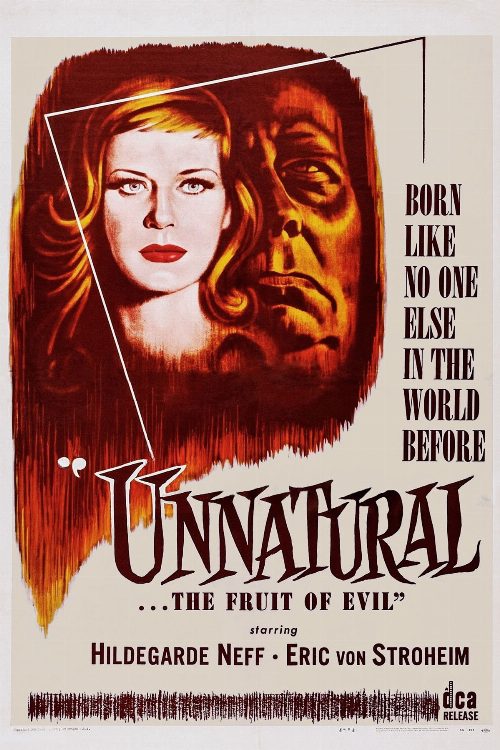
Alraune(1952)
About Alraune
In the 1800s, a stormy love relationship develops quickly between a young medical student and a woman believing herself to be the daughter of his scientist uncle, the student having never heard of her before their chance encounter and both unaware that she is the result of the scientist's illegal experiments with artificial insemination..
Arthur Maria Rabenalt’s 1952 adaptation of Alraune stands as a fascinating relic of post-war German cinema, capturing a dark, sophisticated strain of speculative fiction that feels centuries ahead of its time. While modern global audiences often associate the German film industry with the stark realism of the era, this production leans heavily into the gothic sensibilities of a twisted scientific experiment gone wrong. Centering on the moral decay inherent in defying nature, the film weaves together themes of forbidden romance and biological horror. It is less a traditional monster movie and more a meditation on the existential dread of being created rather than born, a concept that resonates deeply with the contemporary obsession with artificial intelligence and bioethics seen in today’s pan-Indian sci-fi landscape.
The narrative hook revolves around a woman whose very existence is a byproduct of a laboratory procedure conducted by her supposed guardian. For viewers who appreciate the slow-burn psychological tension found in classic suspense dramas or the complex character studies prevalent in current Tamil or Malayalam independent cinema, Alraune offers a compelling case study in atmospheric storytelling. Hildegard Knef delivers a performance that balances vulnerability with an underlying sense of unease, perfectly complementing the brooding presence of Erich von Stroheim. The chemistry between the leads is fraught with a tragic inevitability, making the film a must-watch for those who prefer their romances draped in shadows and moral ambiguity rather than standard fairy-tale tropes.
What makes this iteration particularly relevant is how it utilizes its period setting to explore the hubris of the creator. Much like the ambitious genre-bending works currently emerging from the Telugu and Hindi film industries, which often blend mythological roots with futuristic concepts, this film challenges the viewer to question what defines humanity. It is an essential watch for cinephiles who enjoy dissecting the evolution of the mad scientist archetype. By focusing on the internal disintegration of the characters rather than relying on cheap thrills, Rabenalt crafts a haunting experience that lingers long after the credits roll. Whether you are a scholar of European film history or simply a fan of high-concept drama, this piece of mid-century German artistry remains a gripping, if unsettling, exploration of love untethered from the natural order.
Cast(11)