About Boredom in Brno
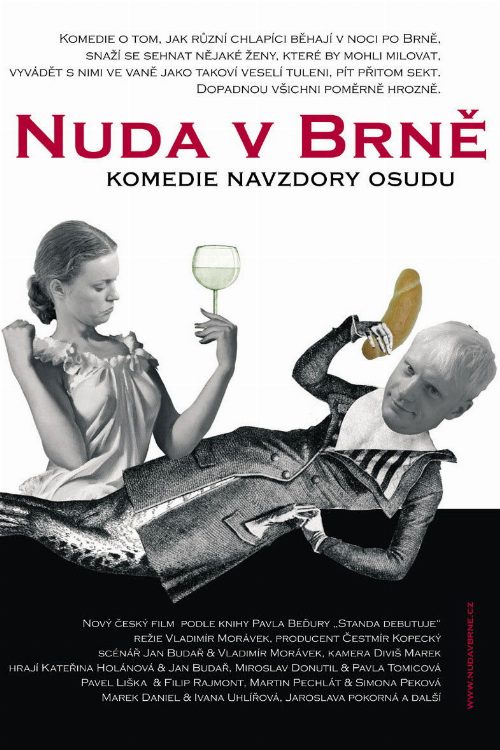
Black-and-white comedy about two young people who want to lose, finally, their innocence, and about life in a very boring city of Brno ...
The stark monochrome aesthetic of Boredom in Brno serves as a visual mirror for the existential stagnation felt by its protagonists, offering a refreshing departure from the vibrant, high-octane spectacles currently dominating global box offices. Directed by Vladimir Moravek, this 2003 Czech production captures the specific, localized malaise of a city often sidelined in favor of Prague, framing the mundane struggle for personal fulfillment against the backdrop of an urban landscape that seems to have stopped breathing. While Indian cinema audiences are currently accustomed to the grand emotional arcs and sweeping musical numbers of contemporary Telugu or Hindi hits, this film offers a grounded, intimate alternative that prioritizes dry wit and understated observation over melodrama. It is a quintessential piece of European independent cinema that finds humor in the crushing weight of ordinary life, making it a compelling watch for viewers who appreciate the character-driven narratives found in the works of directors like Hrishikesh Mukherjee or the modern sensibilities of Malayalam indie dramas.
The narrative focuses on a pair of young adults burdened by the weight of their own unfulfilled desires and a persistent, suffocating boredom that permeates their environment. By choosing to strip away the color palette, Moravek forces the audience to engage deeply with the expressive performances of Miroslav Donutil and the rest of the cast, who navigate the trivialities of their existence with a mix of longing and resignation. This is not a film about explosive change or life-altering revelations, but rather a study of the quiet, awkward moments that define the transition into adulthood. It speaks to anyone who has ever felt trapped by their surroundings, transforming the specific geography of Brno into a universal symbol for the places we inhabit while waiting for our real lives to begin.
For the international cinephile looking to expand their horizons beyond the mainstream, this film functions as a masterful exercise in tone. It manages to balance the delicate line between comedy and drama, ensuring that its critique of societal monotony never becomes too cynical to remain engaging. Fans of world cinema who prioritize thematic depth and atmospheric storytelling will find this a worthwhile addition to their watchlist, as it captures a distinct moment in Czech film history that remains relevant today. By avoiding the typical trappings of a romantic comedy, it stays true to its premise, offering a poignant look at the human impulse to seek meaning in the most unremarkable of settings.