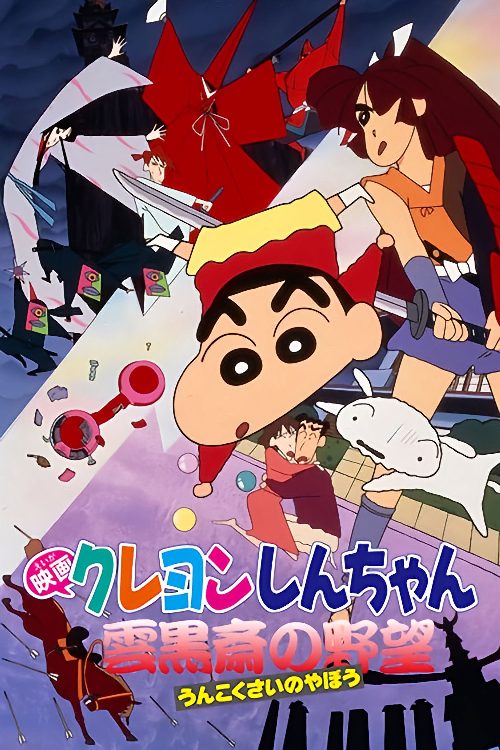
Crayon Shin-chan: Unkokusai's Ambition(1995)
About Crayon Shin-chan: Unkokusai's Ambition
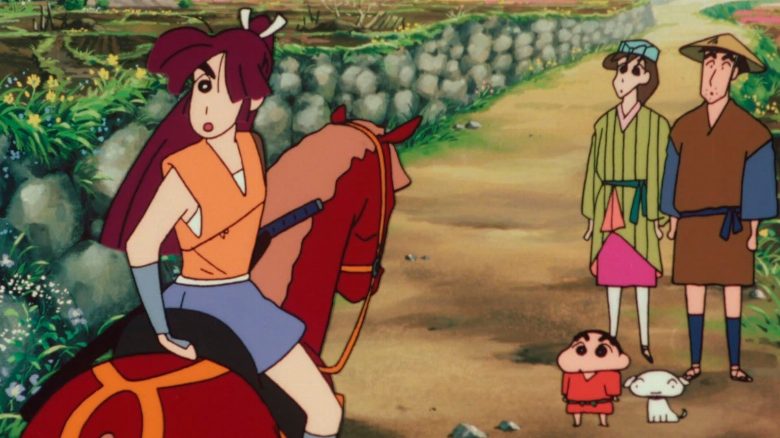
A time traveler claims that bad guys are trying to change the past! Shin-chan is on the case, going back in time to defeat the evil Lord Unkokusai.
Stepping into the vibrant world of early nineties Japanese animation, Crayon Shin-chan: Unkokusai's Ambition remains a fascinating artifact of a franchise that balances crude humor with genuine heart. While many international audiences associate the Shin-chan brand with its irreverent, slapstick television origins, this theatrical feature leans into a grander, more adventurous scope that demonstrates the versatility of the Nohara family. By thrusting the mischievous protagonist into a historical conflict involving temporal meddling and formidable antagonists, the film elevates its usual domestic chaos into a high-stakes struggle that feels surprisingly expansive for a production from this era.
The narrative functions as a playful subversion of the samurai epic, grounding its fantastical premise in the recognizable personality quirks of Shin-chan. Within the landscape of Japanese animation history, this work stands out for its ability to marry the distinctively cheeky tone of the series with the grandeur of a period piece. For viewers familiar with the evolving trends in Indian cinema, where historical dramas often carry heavy emotional weight, this film provides a refreshing contrast. It proves that even the most whimsical characters can be dropped into a setting of traditional warfare and political intrigue without losing the essence of their chaotic charm. The film is perfectly suited for those who appreciate animation that does not take itself too seriously while still offering a cohesive and engaging quest structure.
The directorial approach captures the unique energy of the mid-nineties, a period when the animation industry was refining its transition toward more cinematic storytelling for established television properties. Akiko Yajima delivers a quintessential performance that anchors the film, ensuring that even amidst the time-travel mechanics and the looming presence of the antagonist, the audience remains tethered to the familiar rhythms of the protagonist. Because it avoids the overly sentimental tropes often found in genre films, the project maintains a sharp, satirical edge that distinguishes it from more earnest family-oriented features. It is a quintessential example of how a long-running character can be reinvented for a larger canvas, making it an essential watch for enthusiasts of global animation who enjoy seeing how iconic cultural figures navigate shifting genres and environments. Whether you are a longtime devotee of the series or someone looking to explore the roots of this enduring Japanese phenomenon, the film offers a rare glimpse into a creative period where experimental storytelling met mainstream popularity with effortless grace.
Cast(11)