About Die chinesische Mauer
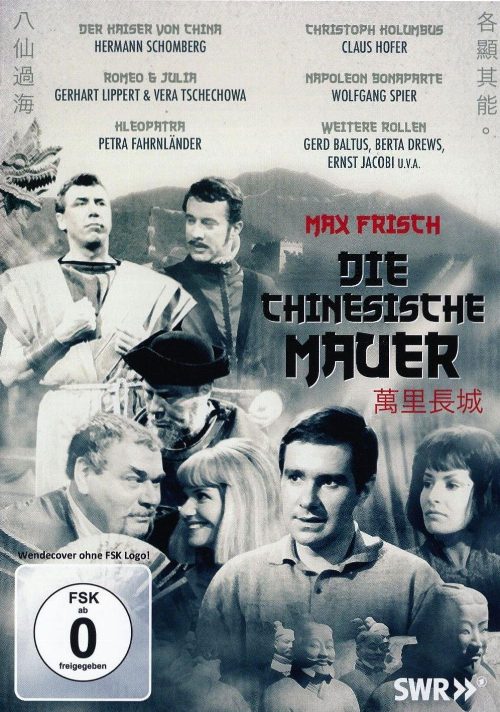
A gigantic masked ball is held at the court of the Chinese emperor Hwang Ti. The builder of the wall surrounding the vast land The builder of the enormous wall surrounding the vast country celebrates his victory over his last enemies and does not shy away from inviting dictators, generals, and famous historical figures from all eras. Napoleon Bonaparte is among the guests, as are Pontius Pilate and Christopher Columbus. Among the revelers, however, is an intellectual from the 20th century who knows the history of the last 2000 years perfectly and points out to the powerful their mistakes and their senseless wars. Those present listen to the man, but do not understand the meaning of his words.
Cinema often serves as a mirror to our own turbulent political landscape, and the 1965 television production Die chinesische Mauer stands as a fascinating example of how satire can transcend its era. Directed by Hans Lietzau, this German language feature functions as a surrealist theatrical experiment, transplanting the concept of a historical masquerade into the heart of a despotic empire. By inviting figures as disparate as Napoleon Bonaparte and Pontius Pilate to the court of Emperor Hwang Ti, the narrative constructs a playground for philosophical debate. It is a work that prioritizes intellectual engagement over linear storytelling, positioning itself as a biting critique of human vanity and the cyclical nature of authoritarian power. For viewers accustomed to the high energy and mass appeal of current Indian cinema, this film offers a starkly different, contemplative pace that feels more akin to a stage play than a traditional blockbuster.
The core of the experience lies in the presence of an anonymous traveler from the modern age who serves as the audience surrogate. Armed with the hindsight of two millennia, this character attempts to dismantle the delusions of grandeur held by the assembled tyrants and explorers. While the film is a product of its time, its central theme remains remarkably relevant to contemporary audiences interested in how history is perceived by those who wield power. Fans of psychological dramas or those who enjoy the thematic depth found in the more cerebral offerings from the Malayalam or Tamil industries will likely appreciate the way the script weaves existential dread into its comedic framework. It is not a film designed for casual viewing, but rather for those who enjoy dissecting the motivations of historical icons and the futility of ego.
Hans Lietzau displays a keen eye for staging, utilizing the limited scope of a television production to create an atmosphere of claustrophobic opulence. The cast, including Vera Tschechowa and Robert Meyn, navigates the dense, dialogue-heavy script with a sense of gravity that elevates the absurd premise into something far more haunting. As we see in the best examples of global cinema, the ability to blend genres provides a unique entry point for audiences to confront uncomfortable truths about leadership and societal progress. Those who seek out films that challenge the status quo and prioritize rigorous intellectual discourse will find this piece to be a compelling addition to their watch list. It remains a singular entry in 1960s television, proving that a sharp script can be just as impactful as a massive production budget when it dares to interrogate the follies of mankind.
Cast(12)








Crew
Director
Theatre Play
Original Music Composer
Director of Photography
Producer
Sound
Similar Films