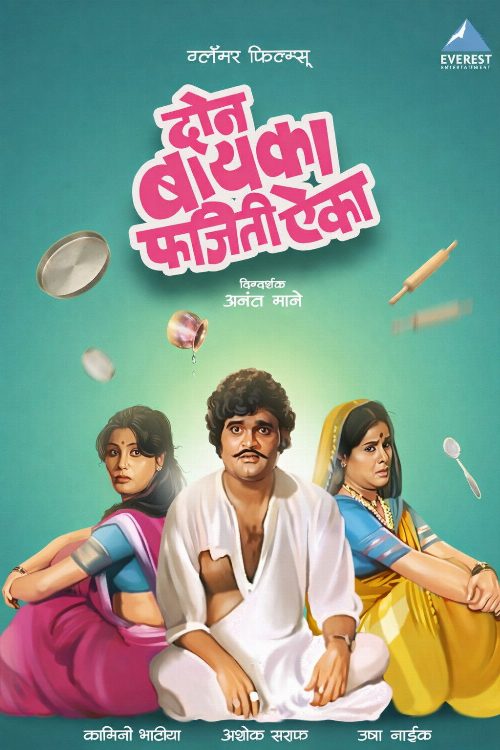
Don Baika Phajeeti Aika(1982)
About Don Baika Phajeeti Aika
A married man gets involved with a local dancer. Later, things get complicated for him after he decides to secretly marry the dancer and live with his two wives under the same roof.
Stepping back into the landscape of early eighties Marathi cinema, Don Baika Phajeeti Aika serves as a quintessential example of the regional comedic traditions that defined the era. The narrative centers on a husband who finds himself trapped in a web of his own making after courting a performer, leading to an ill-advised decision to maintain two households simultaneously. While the premise of domestic chaos and marital deception is a classic trope in Indian storytelling, this particular film leans into the farce that was frequently explored in Marathi theater and screen productions during that decade. By placing the protagonist in a situation where he must balance his dual lives under one roof, the movie taps into the anxieties and humor surrounding social norms and the absurdity of keeping secrets within a tight-knit community.
The film is particularly notable for its reliance on the chemistry between the lead performers, Kamini Bhatia and Ganpat Patil, who carry the weight of the narrative through their comedic timing. For viewers interested in the evolution of Marathi cinema, this production provides a window into the industry’s shift toward lighthearted social commentary before the turn of the millennium. Unlike the high-octane dramas that often dominate current regional box offices, this story focuses on character-driven misunderstandings and the inevitable unraveling of a fragile charade. It is an ideal watch for those who appreciate old-school slapstick and the cultural nuances of Maharashtra, as it captures a specific period where domestic comedy was the gold standard for mainstream entertainment.
While modern audiences might view the plot’s central conflict through a different lens, the film remains a significant artifact of a time when directors prioritized situational irony over spectacle. The direction emphasizes the claustrophobic nature of the protagonist’s double life, ensuring that the tension between his two spouses remains at the forefront of every scene. This project stands as a testament to the enduring appeal of the domestic farce, a genre that has seen countless iterations across various Indian languages, yet remains uniquely tied to the regional sensibilities of the Marathi film industry. For film enthusiasts seeking to explore the foundational works of the eighties, this story offers a glimpse into how filmmakers navigated the thin line between moralistic storytelling and pure, unadulterated amusement. It is a nostalgic trip for those who value the legacy of regional actors who built their careers on stage-inspired acting styles and sharp, witty dialogue.