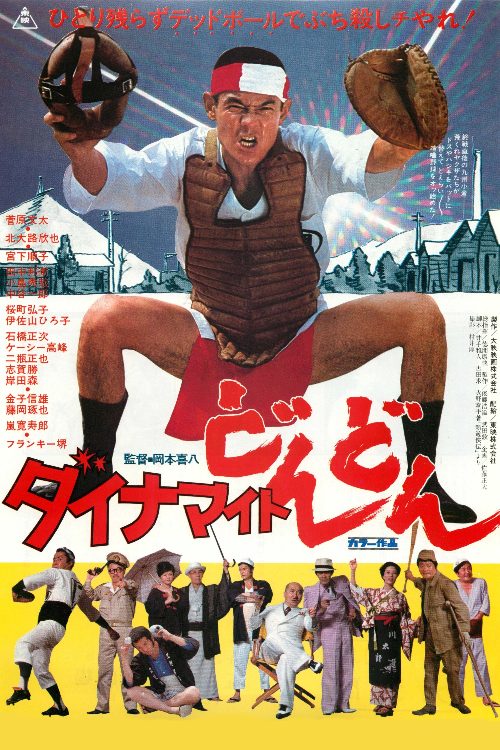
About Dynamite Don-Don
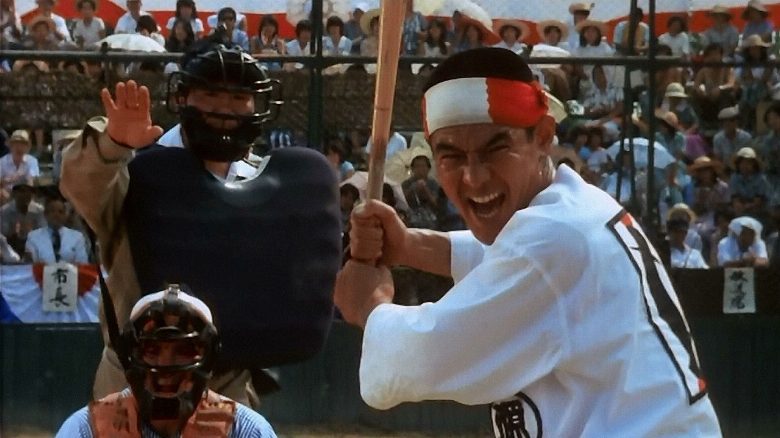
Yakuza Gang War is at the height in North Kyūshū Area in the summer of 1950, particularly between the Okagen Group and the rising Hashiden Gang. Now with the mediation/interference of the Americans, they decide to settle it in a peaceful, *democratic* way, that is, to settle it with a baseball game. Now, with its money and power, The Hashiden group soon recruits a group of gamblers known to be good at baseball from the whole country. So, what is the Okagen Gumi gonna do?
The landscape of late seventies Japanese cinema often prioritized gritty realism or high-octane spectacle, yet Dynamite Don-Don arrives as a delightfully eccentric outlier that manages to satirize the yakuza genre while honoring its established tropes. Set against the backdrop of post-war North Kyushu, the film reimagines the brutal territorial disputes of 1950s crime syndicates through the lens of a sports rivalry. By replacing traditional gang warfare with the structured competition of a baseball game, the narrative highlights the absurdity of power struggles while grounding the premise in the historical reality of American occupation influence. It is a bold stylistic choice that effectively subverts the solemnity usually associated with underworld dramas, turning a battle for regional dominance into a comedic farce that feels both refreshing and deeply cynical.
The film stands out as a unique bridge between the hard-boiled yakuza flicks popularized by studios like Toei and the burgeoning trend of genre-bending comedies that defined the era. For viewers familiar with the classic gangster archetype, the sight of hardened criminals trading their blades for baseball bats provides a sharp, ironic critique of societal shifts during the occupation period. The cast, featuring veterans like Kanjuro Arashi and the iconic Masaya Nihei, navigates this tonal tightrope with surprising grace, balancing the required menace of their criminal roles with the slapstick timing necessary for such a high-concept premise. The production design captures the dusty, sweltering atmosphere of the Kyushu region, ensuring that despite the humorous central hook, the film maintains a distinct visual identity rooted in its specific time and place.
Fans of international cult cinema and those who enjoy films that challenge the boundaries of genre conventions will likely find this a compelling watch. It is positioned as an essential piece of Japanese film history for anyone interested in how directors during this decade experimented with subverting cultural icons like the yakuza. The movie serves as a testament to the creativity of 1970s Japanese filmmakers who were not afraid to inject levity into the darkest corners of their nation’s history. By focusing on the recruitment of diverse gamblers to bolster a team, the story also touches upon themes of desperation and loyalty that resonate far beyond the diamond. It remains a fascinating relic that invites audiences to look at the criminal underworld not as a place of honor and bloodshed, but as an arena for petty, albeit entertaining, rivalries.
Cast(36)















Crew
Executive Producer
Original Music Composer
Sound Recordist
Producer
Editor
Director of Photography
Original Story
Production Design
Director
Similar Films